
TL;DR
- Eavestrough cleaning removes leaves, dirt and debris from gutters so rainwater and melting snow drain properly away from your home.
- Clogged eavestroughs are a leading cause of ice dams in Toronto winters, not just summer overflow.
- Most homes need cleaning twice a year, spring and fall, more often near mature trees.
- Professional cleaning typically includes downspout checks and a slope inspection, not just scooping out visible debris.
- Gutter guards reduce cleaning frequency significantly, though they don’t eliminate the need for maintenance entirely.
What Eavestrough Cleaning Actually Is
Eavestrough cleaning is the process of removing leaves, dirt, shingle grit and other debris from your gutters and downspouts so water can flow freely off your roof and away from your home’s foundation. An eavestrough, also called a gutter, is the trough running along your roofline that catches rainwater and melting snow and channels it into a downspout, which then directs it away from the base of the property (Ratehub home maintenance guide, 2024). When that channel is blocked, water has nowhere to go but over the edge or, worse, backward into the roofline itself.
Why Clogged Eavestroughs Cause More Than Just Overflow
Most explanations stop at “water damage,” which undersells how many separate problems stem from one blocked gutter. Overflowing water pools around the foundation, which over time can lead to basement leaks and cracking. Water sitting in a clogged trough also gets behind the gutter itself, causing rot to the fascia board and the edge of the roof. In more serious cases, trapped moisture against wood surfaces creates conditions for mold growth, which is a slower but genuinely costly problem to fix once it starts.
Why This Is a Bigger Deal in Toronto Winters Than Most Guides Mention
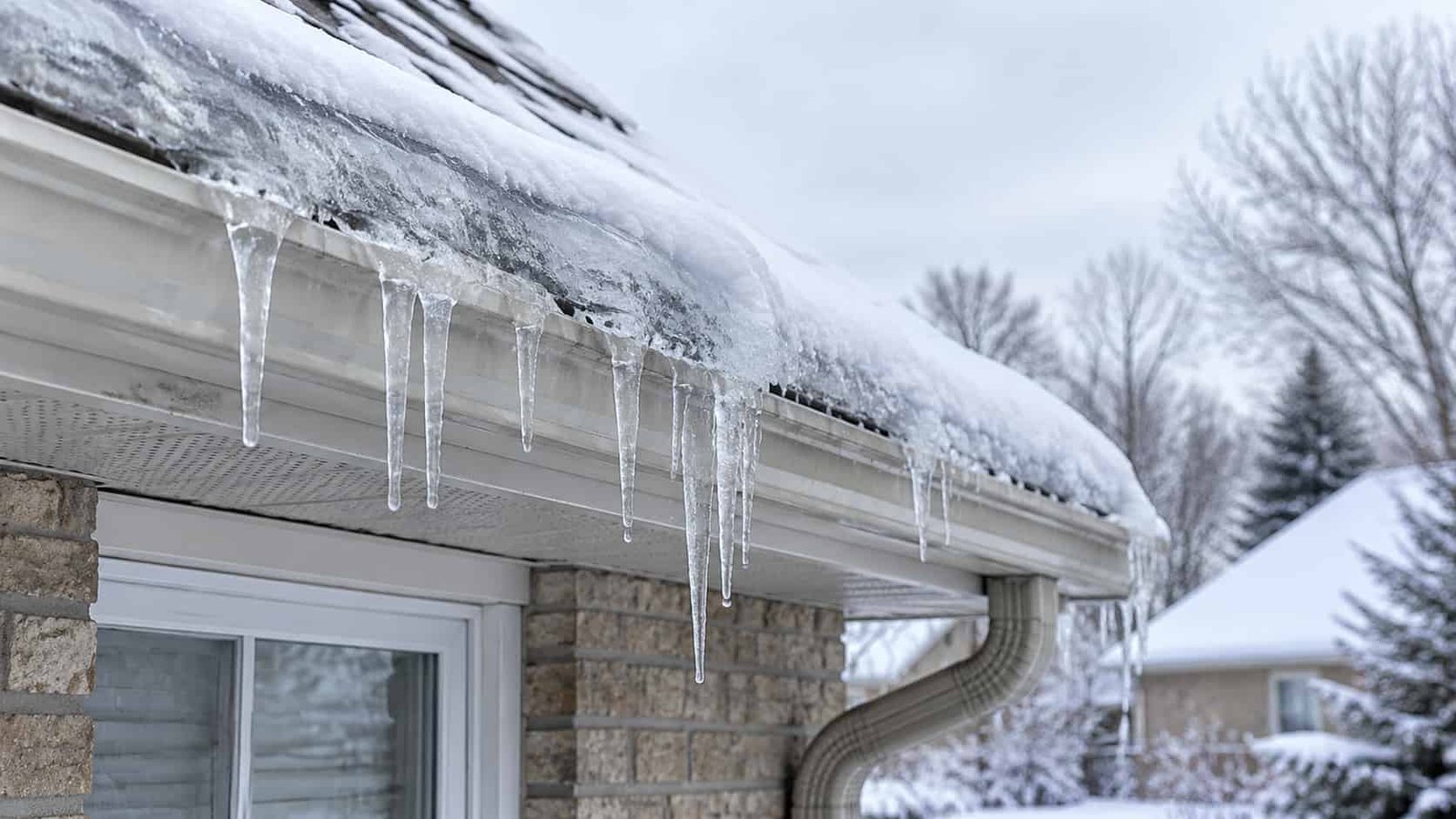
This is the part most eavestrough content skips entirely, even though it’s one of the most expensive problems a blocked gutter can cause locally. When eavestroughs are clogged going into winter, melting snow and ice have nowhere to drain, so water refreezes at the edge of the roof and builds into what’s known as an ice dam. Ice dams force meltwater back up under roof shingles, which can lead to interior water damage that’s far more expensive to repair than the gutter cleaning that would have prevented it (Ontario building maintenance guidance, 2024). In practice, a fall cleaning matters more for ice dam prevention than most homeowners realise, since it’s really a winter problem being solved in autumn.
How Professional Eavestrough Cleaning Actually Works
A proper cleaning goes further than scooping out visible leaves, which is the main gap between a DIY effort and a professional visit.
| Step | What it covers |
| Debris removal | Leaves, twigs, mud, shingle grit and standing sludge removed from the trough |
| Downspout check | Air or water tested through downspouts to confirm nothing is blocked internally |
| Slope inspection | Checking that the gutter still angles correctly toward the downspout for proper flow |
| Exterior wash | Removing dirt or discoloration on the outside face of the eavestrough itself |
| Damage inspection | Flagging sagging brackets, separated seams or corner sealant that needs attention |
Downspout blockages in particular are easy to miss without a proper check, since the visible trough can look completely clear while an elbow further down the pipe is fully blocked.
DIY Eavestrough Cleaning vs Hiring a Professional
Cleaning your own eavestroughs is possible for a single story home with a secure ladder and reasonable comfort with heights. The process involves securing a ladder against the house, manually clearing debris by hand or with a small scoop, then flushing the system with a garden hose to check for flow and leaks. For anything beyond a single story, or for a home surrounded by mature trees where the volume of debris is heavier, professional cleaning tends to be safer and more thorough, since technicians are trained to work at height and typically use suction or vacuum systems that clear finer debris a hand scoop misses.
In practice, the properties that benefit most from professional service aren’t just tall homes. Older properties with original gutter systems often have subtle sagging or separated seams that are easy to miss during a DIY clean but obvious to a trained eye during a proper inspection.
How Often Eavestroughs Actually Need Cleaning
Most homes do well with two cleanings a year, once in spring to clear whatever built up over winter, and again in late fall after leaves have mostly dropped. Properties directly under or near large trees usually need more frequent attention, sometimes three to four times a year, since leaf and needle debris accumulates far faster than on an open lot. Waiting a full year between cleanings is one of the most common mistakes homeowners make, since by the time overflow becomes visible, debris has usually been sitting long enough to start affecting drainage.
How Gutter Guards Change the Cleaning Conversation
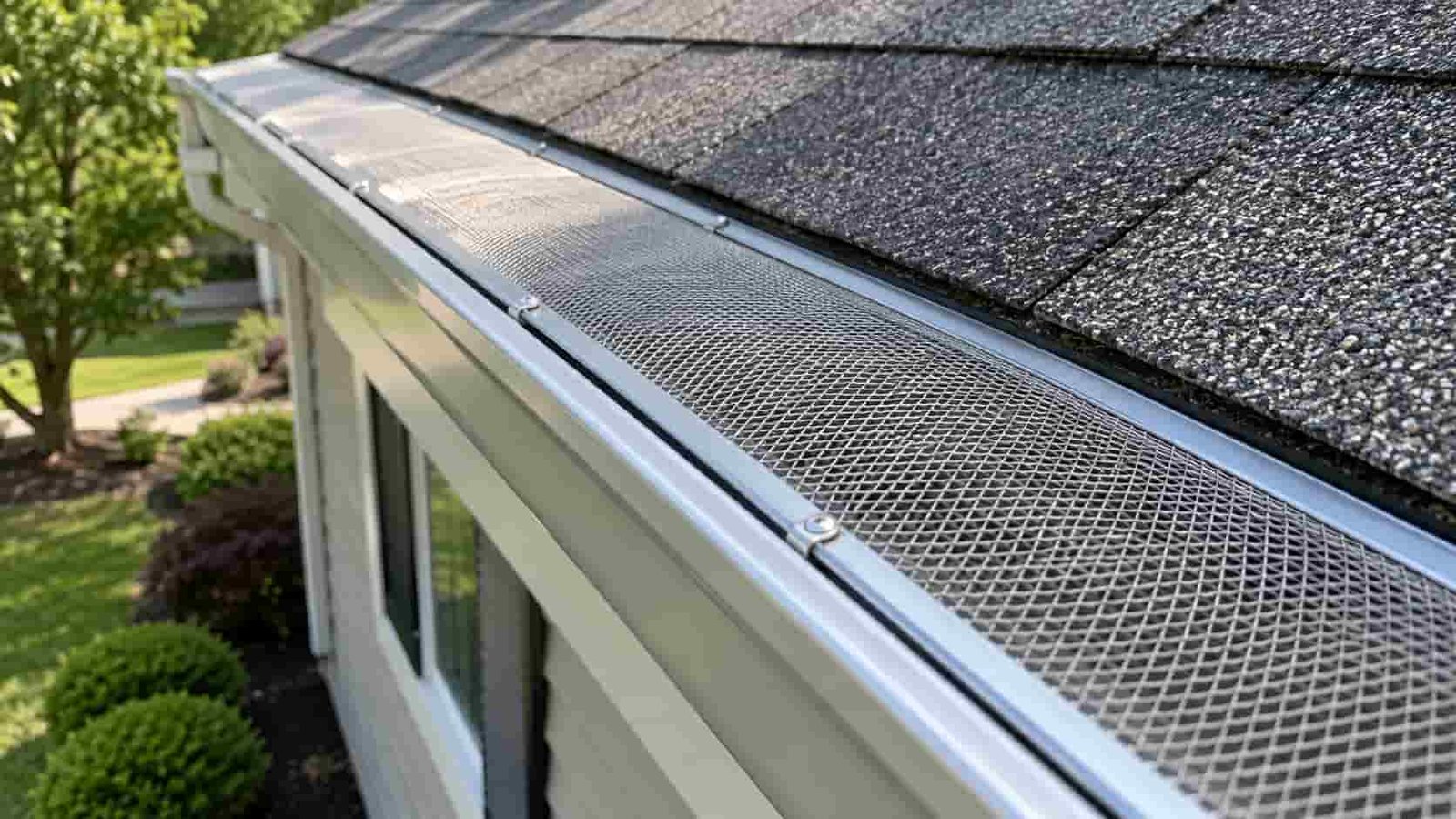
This is where most eavestrough content stops short of a genuinely useful answer. Gutter guards, like Smart Screen systems, don’t eliminate the need for cleaning entirely, but they significantly reduce how often full debris removal is needed, since they block larger leaves and debris from entering the trough in the first place while still letting water flow through freely. For homes near trees that would otherwise need three to four cleanings a year, guards can often bring that down to an annual inspection and light clean instead. It’s worth treating gutter guard installation and eavestrough cleaning as connected decisions rather than separate services, since guards installed on a system that’s already clogged won’t solve an existing drainage problem.
Signs Your Eavestroughs Need Cleaning Now
A few visible signs mean it’s time to book a cleaning rather than wait for the next scheduled visit:
- Water visibly overflowing the edge of the gutter during rain
- Plant growth or visible debris piling up in the trough
- Water marks or staining on the siding beneath the gutter line
- Sagging sections where the gutter has pulled away from its brackets
- Standing water in the trough even after dry weather
Frequently Asked Questions
How do I know if my eavestroughs need cleaning?
Visible overflow during rain, staining on the siding below the gutter, or standing water in the trough are the clearest signs it’s overdue.
How often should eavestroughs be cleaned in Toronto?
Most homes need cleaning twice a year, spring and fall, with more frequent cleaning needed for properties near mature trees.
Do gutter guards mean I never need to clean my eavestroughs again?
No, but they significantly reduce how often full cleaning is needed, since they block most leaf and debris buildup while still allowing water through.
Can clogged eavestroughs really cause ice dams?
Yes, blocked gutters going into winter prevent proper drainage of melting snow, which can lead to ice buildup and water forcing its way under roof shingles.
Is it worth hiring a professional instead of cleaning eavestroughs myself?
For single story homes with easy access, DIY is possible. Multi-story properties, or homes with heavy tree debris, are usually safer and more thoroughly cleaned by a professional team.
What’s the difference between eavestrough cleaning and eavestrough repair?
Cleaning removes debris and checks flow and slope. Repair addresses physical issues like sagging brackets, separated seams or leaks found during that inspection.




3 Responses