
TL;DR
- Gutter guards are protective covers installed over eavestroughs to block leaves and debris while still letting water flow through.
- The main types are mesh screens, reverse curve (surface tension) guards, foam inserts and brush guards, each with different strengths.
- Guards reduce cleaning frequency significantly but don’t eliminate the need for maintenance entirely.
- In Toronto, how a guard handles snow load and ice buildup matters as much as how well it blocks leaves.
- Installation should always happen on clean, undamaged eavestroughs, since guards fitted over existing clogs don’t solve the underlying problem.
What Gutter Guard Installation Actually Involves
Gutter guard installation is the process of fitting a protective cover over an existing eavestrough system so that leaves, twigs and other debris are blocked from entering while rainwater still flows through freely underneath. The guard sits directly on top of the gutter’s opening, attached with clips, screws or brackets depending on the type, and is measured and cut to match the exact length of each section of gutter (HomeAdvisor gutter guard guidance, 2024). Done properly, it’s a one-time fitting rather than a recurring service, though the eavestrough underneath still needs periodic attention.
The Main Types of Gutter Guard
Not all gutter guards work the same way, and the right choice depends on the trees around your property and the local climate as much as personal preference.
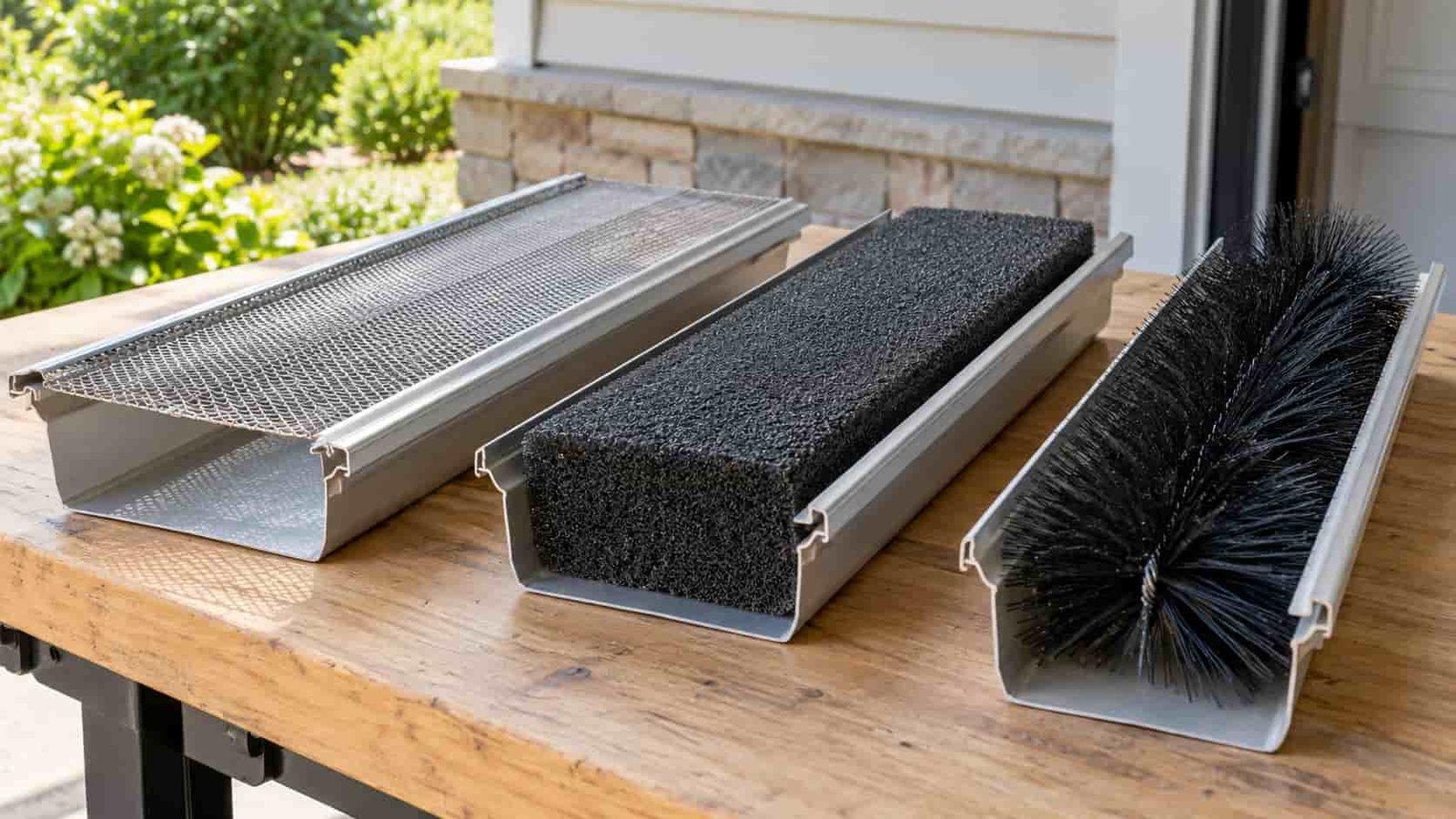
| Guard type | How it works | Best for |
| Mesh screen | Fine mesh blocks debris while water passes through small openings | Most residential properties with moderate tree coverage |
| Reverse curve (surface tension) | Uses water’s surface tension to pull it around a curved lip while leaves fall off the edge | Heavy leaf-drop areas, though can struggle with fine debris |
| Foam insert | A porous foam block sits inside the gutter, letting water through while blocking debris | Simple retrofits, though foam can degrade over time |
| Brush guard | A cylindrical bristle brush sits in the gutter, catching debris on top of the bristles | Light debris areas, easiest DIY installation |
Smart Screen style aluminum mesh guards are among the most commonly installed for GTA homes, since they hold up well structurally and handle both the fine debris and heavier leaf load a typical property sees through spring and fall.
Why Snow and Ice Performance Matters More Here Than Leaf Blocking
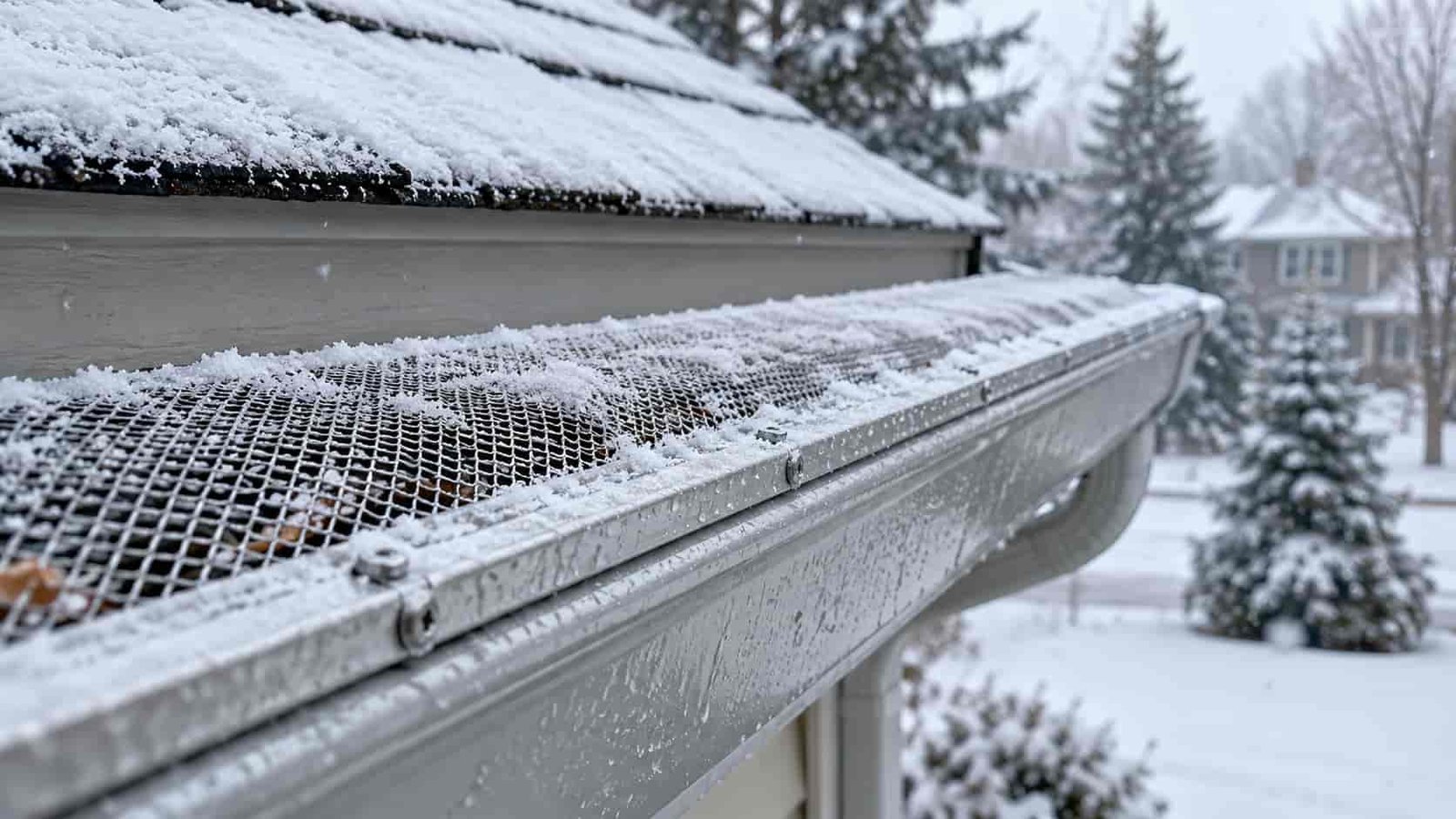
This is the piece most gutter guard content skips entirely, since it’s written for climates that don’t deal with a real winter. A guard that performs perfectly at blocking autumn leaves can behave very differently once snow load and freeze-thaw cycles are added to the equation. Foam inserts, for example, can trap moisture and freeze solid in cold weather, effectively blocking the gutter from the inside rather than protecting it. Rigid mesh and reverse curve guards generally handle snow weight and ice formation better, since they don’t absorb and hold water the way foam does (Ontario roofing and exterior maintenance guidance, 2024). In practice, homeowners choosing a guard purely based on online reviews from warmer climates often end up with a product that underperforms through a Toronto winter specifically.
Why Gutter Guards Reduce Maintenance but Don’t Eliminate It
A common misconception is that gutter guards mean never thinking about gutters again, and that expectation causes real disappointment down the line. Fine dust, shingle grit and small seeds can still settle on top of most guard types over time, and this residue eventually needs to be cleared, typically once a year rather than the two to four times a year an unguarded system near trees might need. Guards genuinely reduce the workload and risk of overflow significantly, but an annual check remains part of realistic long-term maintenance.
Installing Guards Over Clean Eavestroughs Only
This step gets skipped more often than it should, and it’s the reason some guard installations fail to deliver the promised results. Fitting a guard directly over an eavestrough that’s already clogged with old debris just seals the existing problem in place rather than solving it. A proper installation always starts with a full cleaning and inspection of the gutter system first, checking slope, downspout flow and any existing damage, before the guard goes on top. Skipping this step is like painting over rust rather than treating it first, the surface problem looks solved while the underlying issue keeps developing.
How Gutter Guard Installation Works Step by Step
A typical professional installation follows a consistent sequence regardless of guard type chosen:
- Full eavestrough cleaning and inspection to confirm the system is in good working condition
- Measuring each gutter section to determine guard quantity and cuts needed
- Cutting guard material to fit each section precisely
- Securing the guard using the method specific to that product, clips, screws or brackets
- A final water test to confirm flow is unobstructed after installation
Most residential installations take a few hours to a full day depending on the size of the property and the number of gutter sections involved.
Cost Considerations and Long Term Value
Gutter guards represent an upfront cost that pays off primarily through reduced cleaning frequency and lower risk of water damage over time. Annual savings from reduced cleaning alone are commonly estimated in a meaningful range once the frequency drops from three or four visits a year down to one, and that’s before accounting for the cost avoided from potential water damage, ice dam formation or fascia rot that a well-maintained system helps prevent. In practice, the properties that see the clearest return are those directly under or near large trees, where the difference in cleaning frequency before and after installation is most dramatic.
Signs Your Home Might Benefit from Gutter Guards
- Eavestroughs needing cleaning more than twice a year due to tree coverage
- A history of ice dam formation along the roofline in winter
- Difficulty or discomfort accessing gutters safely for regular cleaning
- A multi-story property where cleaning access is more complex
- Wanting to reduce long-term maintenance calls rather than eliminate them entirely
Frequently Asked Questions
Do gutter guards really stop the need for cleaning completely?
No, they significantly reduce how often cleaning is needed, but fine debris and dust can still settle on top and typically need clearing once a year.
What’s the best type of gutter guard for a Toronto home?
Mesh screen and reverse curve guards generally perform better through winter conditions than foam inserts, which can trap moisture and freeze.
Can I install gutter guards myself?
Yes, for simpler guard types like brush or foam inserts. Mesh and reverse curve systems that need precise cutting and secure fastening are usually more reliably fitted by a professional.
Should my eavestroughs be cleaned before gutter guards are installed?
Yes, always. Installing guards over an already clogged or damaged system just seals the existing problem in place rather than fixing it.
How long do gutter guards typically last?
This depends on material and climate exposure, though quality aluminum mesh systems are generally built to last many years with only occasional light maintenance.
Will gutter guards help prevent ice dams in winter?
Indirectly, yes, since keeping the eavestrough clear of debris supports proper drainage, which is one part of reducing ice dam risk alongside general roof and attic insulation.




One Response