TL;DR
- Post-construction cleaning removes dust, debris and residue left behind after a building or renovation project, making a space safe and ready for use.
- It typically happens in phases, rough clean, main clean, then final detailing, rather than as a single pass.
- Windows and glass need a distinct approach from the rest of the property, since paint, mortar and adhesive residue can scratch glass if handled incorrectly.
- Skipping proper post-construction cleaning risks scratched new floors, clogged HVAC filters and construction dust left circulating in the air.
- Timing this cleaning right after major work finishes, rather than waiting, makes residue significantly easier to remove.
What Post-Construction Cleaning Actually Involves
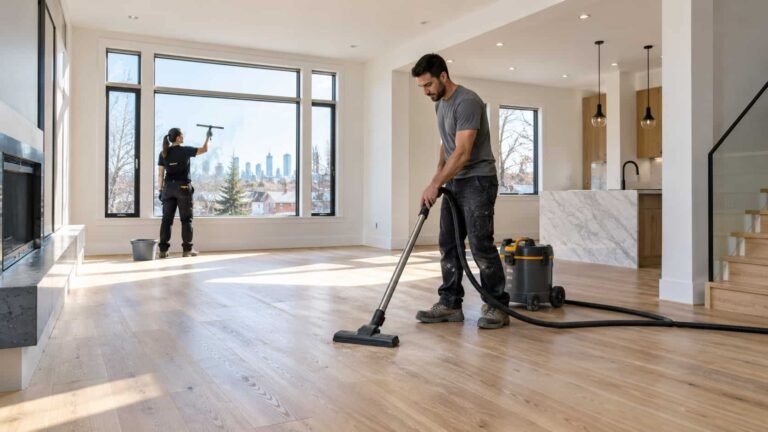
Post-construction cleaning is the thorough cleaning process that happens after a building or renovation project wraps up, removing construction dust, debris and leftover materials so the space is safe and genuinely ready for occupancy. This is a distinct category from routine cleaning, since construction leaves behind specific residues, drywall dust, paint splatter, adhesive marks and fine abrasive particles, that ordinary cleaning tools and products aren’t built to handle (Angi home services guidance, 2024). It covers the interior and often the exterior of a property, though the level of detail needed on each surface varies significantly depending on what the construction work actually involved.
Why This Cleaning Step Genuinely Matters
Skipping or rushing this stage causes problems that surface well after the crew has gone home. Fine construction dust is abrasive enough to scratch new flooring if it’s walked over and ground in before a proper clean, and the same dust clogs HVAC filters quickly, forcing the system to work harder and reducing indoor air quality in the process (Angi renovation cleanup guidance, 2024). Beyond the practical risk, a property that still shows visible construction residue undermines the finished look of the work itself, however well the actual construction or renovation was done.
The Three Phases of Post-Construction Cleaning
Most professional post-construction cleaning follows a structured sequence rather than a single top-to-bottom pass, since attempting full detail work before large debris is cleared just slows the whole process down.
| Phase | What it covers | When it happens |
| Rough clean | Removing large debris, sweeping floors, clearing visible construction waste | Toward the end of the build, once major work is done |
| Main clean | Detailed cleaning of surfaces, fixtures, floors, walls and glass | After rough clean, once the space is fully accessible |
| Final detailing | Touch-up cleaning, polishing, final inspection for anything missed | Just before handover or occupancy |
Skipping straight to a final detail pass without the earlier phases usually means redoing work, since fine dust resettles onto surfaces that were cleaned too early in the process.
Why Windows and Glass Need a Different Approach Entirely
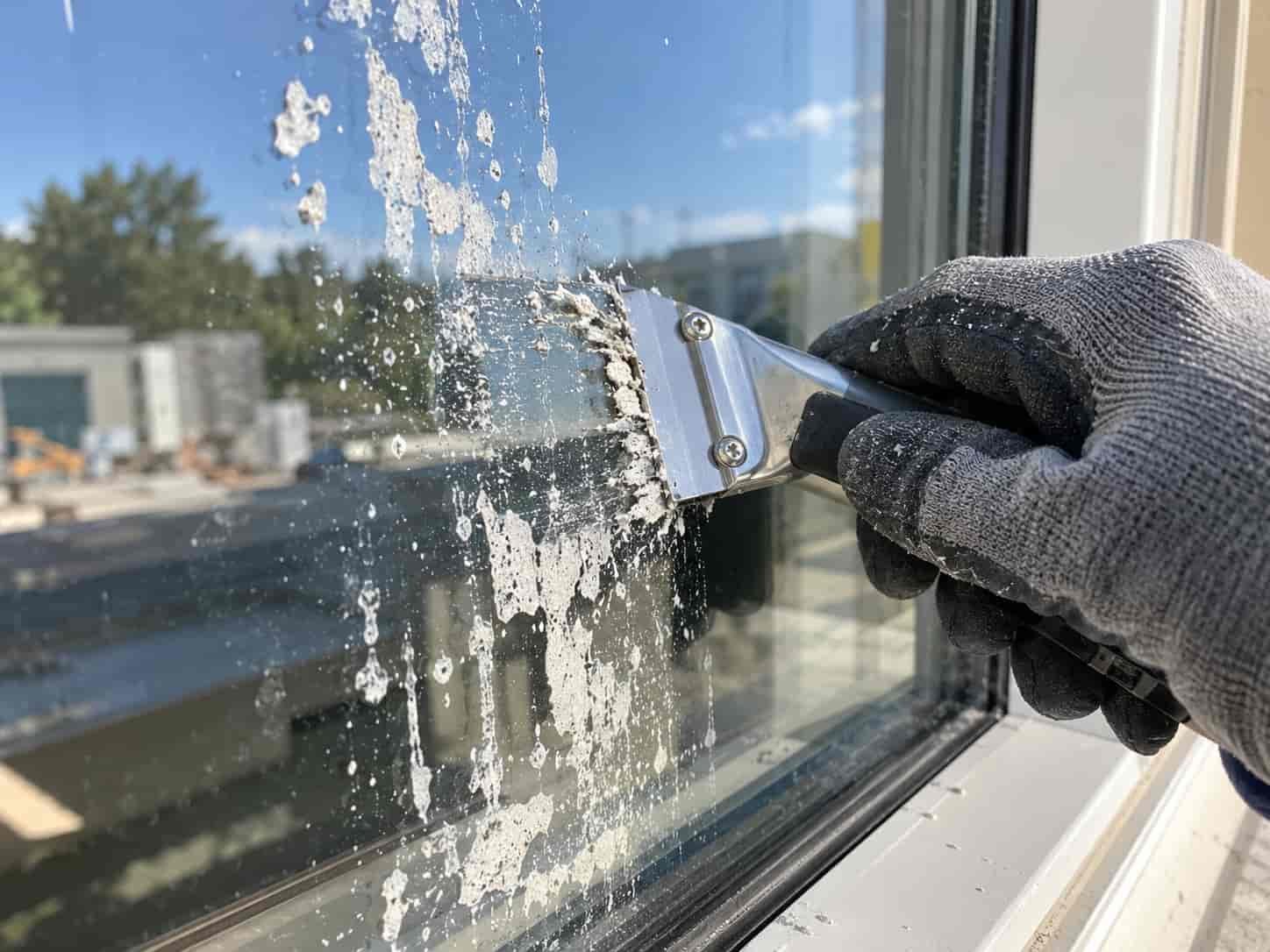
This is the part most general post-construction cleaning guides only mention briefly, treating it as one line item alongside floors and walls, even though it genuinely needs distinct technique and tools. Construction leaves behind paint overspray, mortar or stucco splatter, adhesive residue from protective film, and a fine layer of drywall dust that settles into every window track and frame. Attempting to clean this with standard glass cleaner and a cloth often just smears the residue rather than removing it, and using an abrasive scrubbing pad in an attempt to force it off risks permanently scratching the glass, particularly on tempered or coated windows common in newer builds.
Professional post-construction window cleaning typically starts with careful razor scraping to lift dried paint or adhesive without contacting the glass surface at a damaging angle, followed by a full wash of the glass, frame, track and sill to remove the remaining fine dust (Squeegee Squad industry guidance, 2024). In practice, the frame and track collect just as much fine debris as the glass itself, and skipping this part is the most common reason a newly built home still looks unfinished around the windows even after the rest of the interior has been cleaned properly.
What’s Typically Included in a Full Post-Construction Clean
Beyond the glass-specific work, a thorough post-construction cleaning generally covers the following areas across the property:
- Floors: sweeping, vacuuming and mopping to remove dust, cement residue and adhesive marks left from flooring installation or protective coverings
- Walls: wiping down surfaces to remove dust, marks and fine residue, particularly important on freshly painted walls
- Windows and frames: interior and exterior glass, tracks, sills and frames, as detailed above
- Fixtures and fittings: light switches, door handles, bathroom fittings and any other touchpoints that collect dust during construction
- Vents and HVAC returns: clearing dust that’s settled in and around ventilation to protect air quality and system performance
- Protective film and stickers: removing any manufacturer coverings left on appliances, fixtures or glass
DIY Post-Construction Cleaning vs Hiring a Professional
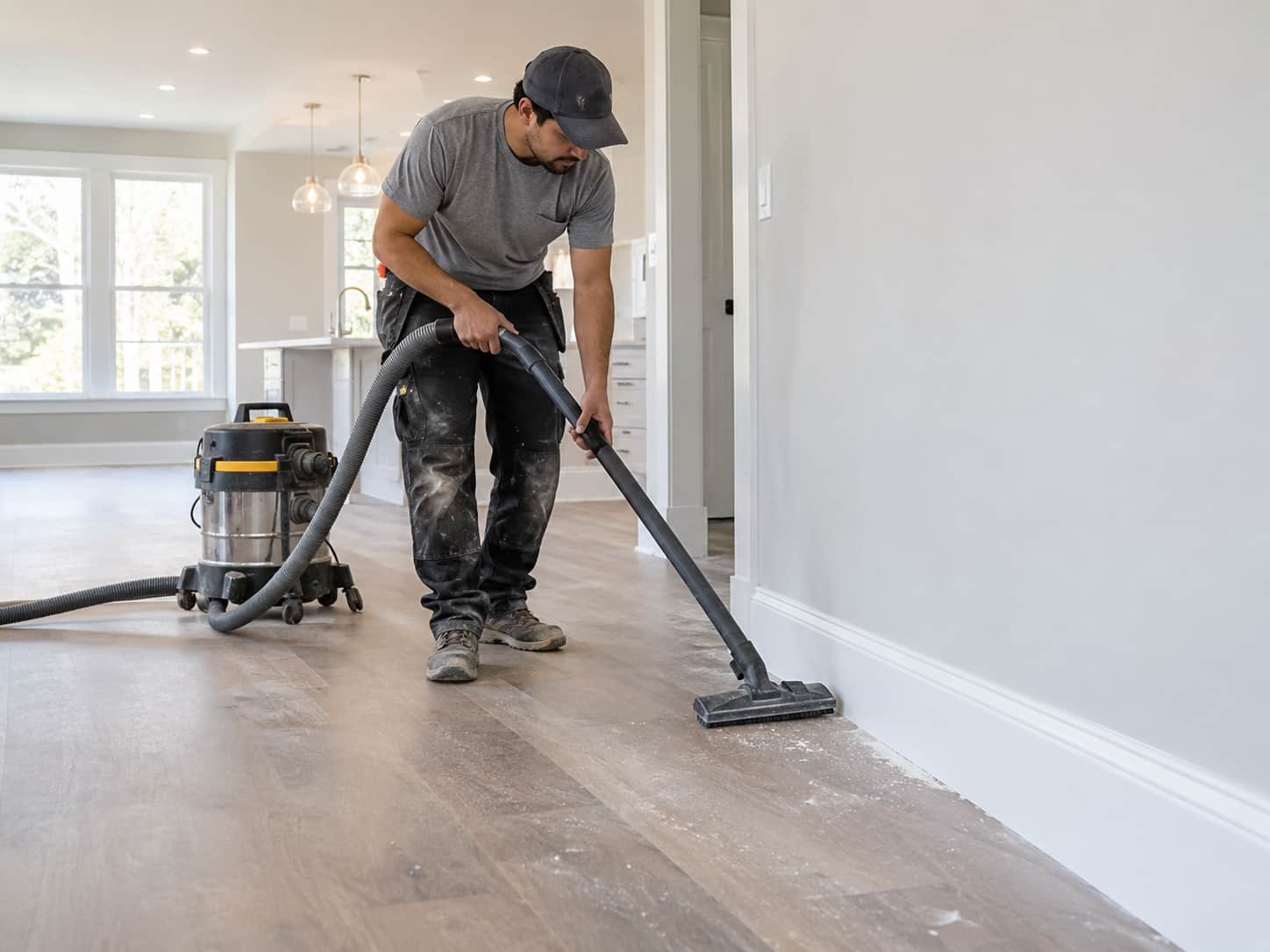
Handling this yourself is possible for a small renovation, a single room refresh, or a limited scope of work where debris and residue are minimal. For a full build, a larger renovation, or any project involving significant glass work, professional cleaning tends to be both faster and safer, since technicians are equipped with the right tools for razor scraping glass without scratching it, HEPA-filtered vacuums for fine construction dust, and the experience to recognise which surfaces need a gentler approach. In practice, the properties that benefit most from professional post-construction cleaning aren’t just large commercial builds, a single-family home renovation with new tempered glass windows or coated glazing carries just as much risk of accidental scratching from an inexperienced DIY attempt.
When to Schedule Post-Construction Cleaning
Timing matters more than most people expect, since residue left too long becomes significantly harder to remove. Paint and adhesive residue on glass, in particular, only gets more stubborn the longer it sits, as it continues to cure and bond more firmly to the surface. The ideal window is as soon as the major construction or renovation work finishes, before move-in, staging, or occupancy, rather than treating it as a task to fit in whenever convenient. For larger projects completed in phases, a rough clean partway through construction, followed by a full main clean and final detail once work wraps up, generally produces a better result than waiting for one single pass at the very end.
Cost Considerations for Post-Construction Cleaning
Pricing for this type of cleaning typically reflects the added time and specialist technique involved compared to routine cleaning, since razor scraping glass, clearing fine construction dust, and detailing fixtures all take longer than a standard clean. Larger properties, more extensive renovation scope, and a higher volume of glass or windows all increase the time required, which is usually reflected in a quote scaled to the specific project rather than a flat rate. Most companies offering this service provide a free estimate based on the scope of work and property size, since post-construction jobs vary too much to price accurately without seeing the property or plans first.
Frequently Asked Questions
How is post-construction cleaning different from regular cleaning?
Regular cleaning maintains an already clean space, while post-construction cleaning is a specialised, deeper process aimed specifically at removing construction dust, debris and residue like paint, adhesive and cement marks.
Why do windows need special treatment after construction?
Paint overspray, mortar splatter and adhesive residue can scratch glass if removed incorrectly, so post-construction window cleaning typically uses careful razor scraping before a full wash, rather than standard glass cleaner alone.
Can I do post-construction cleaning myself?
For a small project with limited residue, yes. For larger builds or renovations, particularly ones involving significant glass work, professional cleaning reduces the risk of accidental damage and saves considerable time.
How soon after construction should cleaning happen?
As soon as possible once major work is finished. Paint and adhesive residue becomes harder to remove the longer it’s left to cure and bond to surfaces.
Does post-construction cleaning include the exterior of a property?
Often yes, particularly exterior windows and glass, which accumulate the same construction dust and residue as interior surfaces during a build.
How much does post-construction cleaning typically cost?
This varies significantly by property size and renovation scope, which is why most companies provide a free estimate tailored to the specific project rather than a flat rate.
Is post-construction cleaning necessary for a small renovation, not just a full build?
Yes, even smaller renovations, like a single room remodel, leave behind dust and residue that benefit from a proper post-construction clean before the space is used normally again.