
TL;DR
- Water overflowing at a specific point during rain usually points to a blockage or a pitch problem in that exact section.
- Sagging sections, visible cracks and separated seams are signs of structural wear that typically get worse over time.
- Water stains, peeling paint or mold on siding beneath the gutter line are downstream signs the system isn’t draining properly.
- In Toronto, freeze-thaw cycles and snow load speed up gutter damage significantly compared to milder climates.
- Some issues are simple sealant-level fixes, while sagging, widespread separation or rust damage usually signal it’s time to consider a fuller repair or replacement.
Water Overflowing During Rain
This is usually the first sign anyone notices, and where it happens tells you a lot about the actual cause. Overflow right at or near a downspout typically points to a blockage further down the pipe, while overflow occurring in the middle of a gutter run, away from any downspout, usually points to a pitch problem, undersized gutters, or not enough downspouts for the roof area being drained (Brothers Gutters diagnostic guidance, 2024). Knowing which type you’re seeing helps set expectations before a technician even arrives.
Sagging or Pulling Away From the House
Gutters are meant to sit flush and level against the fascia board, so any visible dip, sag or gap between the gutter and the house is a clear sign something has failed structurally. This usually happens because brackets have loosened, weakened, or in colder climates, because the added weight of snow and ice over winter has stressed the fasteners beyond what they were built to hold. A gutter that’s visibly pulling away rarely fixes itself and tends to worsen with each additional heavy rain or snowfall.
Visible Cracks and Holes
Cracks and holes are usually easy to spot once you know to look, appearing as small splits or gaps along the length of the gutter. Left alone, small cracks widen over time and let more water escape with each rainfall, which is part of why catching this early keeps the repair simple, a sealant or patch, rather than needing a full section replacement later.
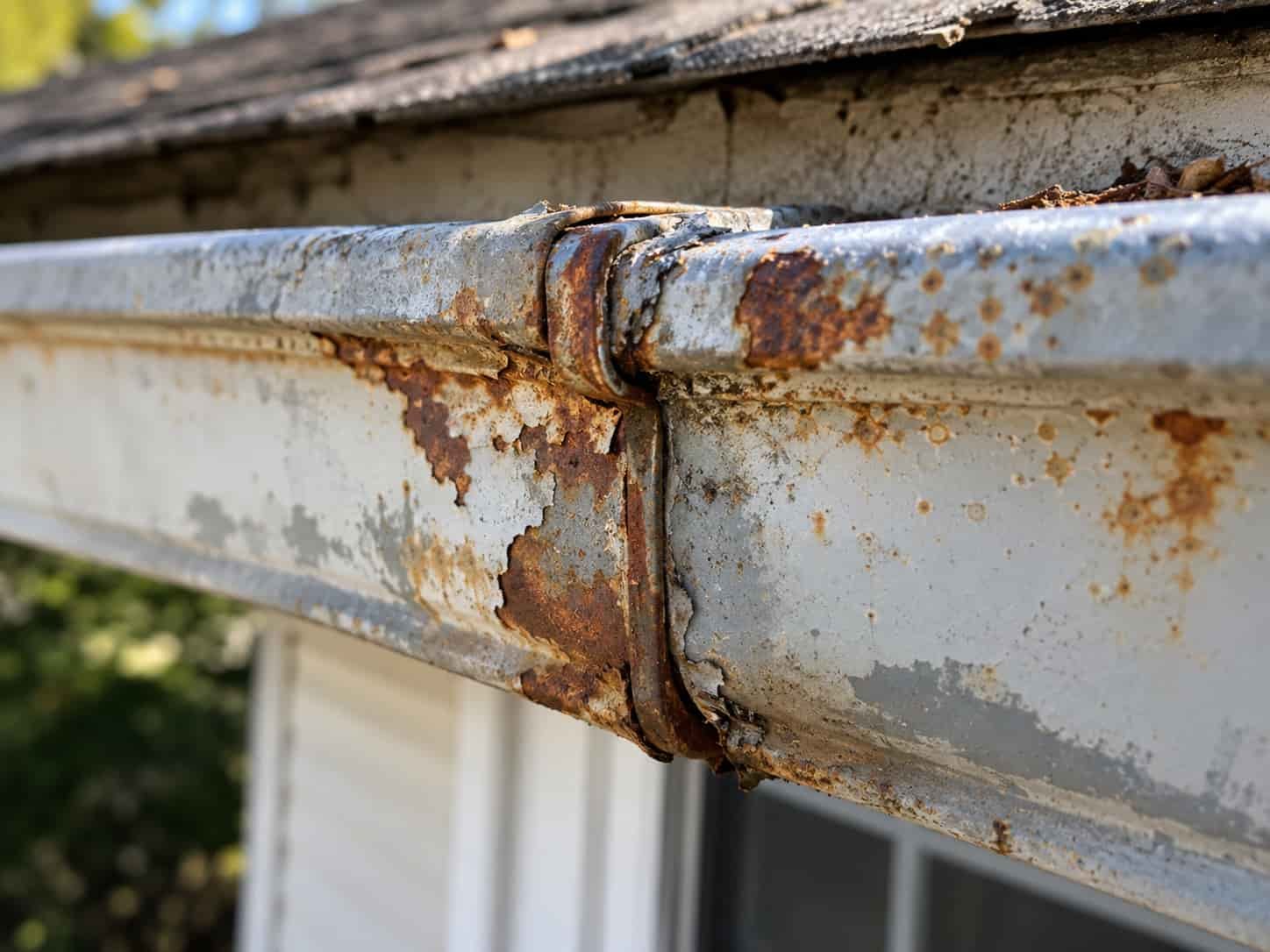
Rust, Corrosion and Flaking Paint
For metal gutter systems, rust spots or flaking paint are early signs of corrosion that will eventually lead to holes if left untreated. This tends to show up first at seams and joints, where water sits slightly longer than along a flat run, making these the spots worth checking most closely during a visual inspection.
Water Stains, Peeling Paint or Mold on Siding
These are downstream signs, evidence that water isn’t being carried away properly even if the gutter itself looks fine from a distance. Stains or peeling paint running down the siding beneath the gutter line usually mean water is overflowing or leaking at that exact point, while mold or mildew growth near the foundation or exterior walls signals moisture that’s been sitting for a while rather than draining as intended (Ratliff Enterprises gutter maintenance guidance, 2024).
Loose Fasteners or Debris on the Ground
Finding screws, nails or small fastener pieces on the ground near your foundation is a sign the gutter system is loosening from the roofline, even if the gutter itself still looks reasonably straight. This is worth checking after any strong wind or heavy storm, since a few loose fasteners now often means a fuller sag develops within a season or two if left unaddressed.
Why Toronto Winters Speed This Up
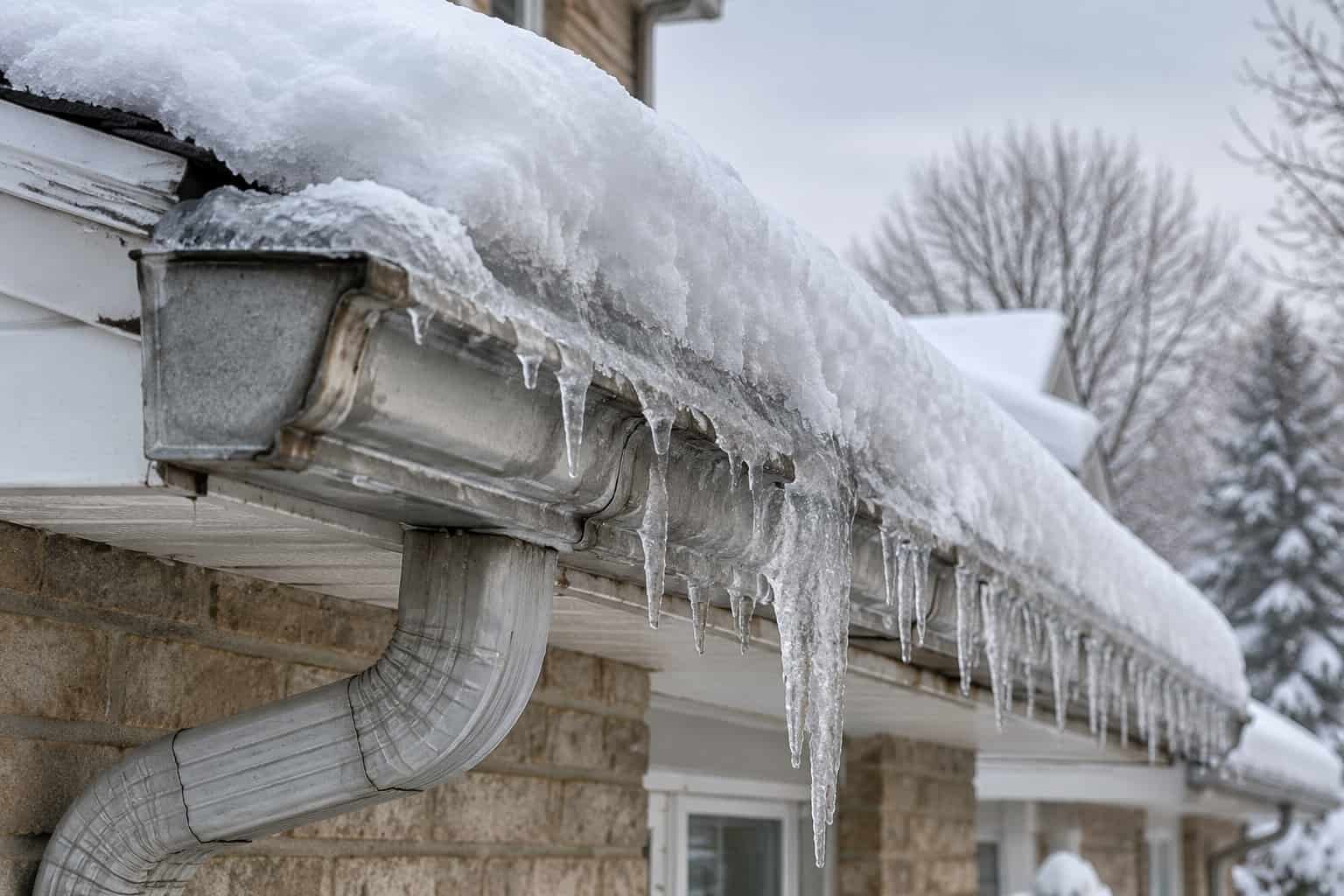
This is the piece that’s easy to miss if you’re only comparing your situation to generic, warm-climate gutter content. Freeze-thaw cycles cause water trapped in small cracks to expand and contract repeatedly through the colder months, widening minor damage far faster than it would in a climate without hard freezes. Snow and ice sitting in a clogged or poorly pitched gutter add significant weight that stresses fasteners and brackets, which is a major contributor to the sagging and pulling-away issues described above (Ontario roofing and exterior maintenance guidance, 2024). In practice, a gutter system that looked fine in October can show noticeably more wear by the following spring specifically because of this cycle, which is why a post-winter inspection matters more here than in milder regions.
Small Fix or Bigger Problem: How to Tell the Difference
Not every sign on this list means the same level of repair, and telling them apart saves unnecessary cost and worry.
| Sign | Usually a simple fix | Usually signals a bigger issue |
| A single small crack or hole | Yes, sealant or patch | No, unless widespread across sections |
| One loose fastener | Yes, re-securing | No, unless multiple sections are loose |
| Visible sagging in one section | Sometimes | Yes, if sagging appears in multiple areas |
| Rust limited to one joint | Yes, spot treatment | Yes, if rust is spreading across the system |
| Water stains on siding in one spot | Yes, likely a local blockage | Yes, if stains appear at several points |
In practice, the deciding factor is usually how many separate issues are showing up across the system at once, one isolated sign is normal wear, several appearing together across different sections points toward the gutter system reaching the end of its reliable lifespan.
What Happens If Gutter Repairs Are Delayed
Putting off a repair rarely keeps the problem the same size. Water that isn’t properly channelled away continues to affect the fascia board, siding and, eventually, the foundation, turning what would have been a straightforward repair into a more expensive fix involving rot, water damage or foundation work. Left through another winter, an already weakened section is also more likely to fail outright under the next heavy snow load rather than simply continuing to leak.
Frequently Asked Questions
How do I know if gutter overflow is a blockage or a bigger problem?
Overflow right at a downspout usually means a blockage there, while overflow in the middle of a gutter run away from any downspout usually points to a pitch or sizing issue instead.
Can I repair a small gutter crack myself?
A single small crack is often manageable with sealant, though it’s worth having a professional confirm there isn’t a wider pitch or fastener issue causing it.
Why do my gutters seem to get worse every winter?
Freeze-thaw cycles and the weight of snow and ice both accelerate existing wear, which is why gutter issues often show up more noticeably after a Toronto winter than during the rest of the year.
Is sagging always a sign I need a full gutter replacement?
Not always. Sagging in a single section can sometimes be repaired by resecuring brackets, though sagging across multiple sections usually signals it’s time for a fuller assessment.
How urgent is it to fix a gutter once I notice a problem?
Fairly urgent. Delaying repair usually lets the underlying issue affect the fascia, siding or foundation, turning a simple fix into a more expensive one.
Should gutter repair be checked at the same time as cleaning?
Yes, a cleaning visit is a natural point to also inspect for cracks, sagging or loose fasteners, since both jobs typically need the same access equipment.




2 Responses