TL;DR
- Clear debris from gutters (eavestroughs) and downspouts, and make sure water is carried away from the house and foundation.
- The Insurance Bureau of Canada advises keeping downspouts free of debris and directing water away from the house to help prevent basement flooding (IBC, 2026).
- Toronto requires property owners to disconnect downspouts from the City sewer system (City of Toronto, 2025).
- Check for sagging, loose fasteners, leaking seams and blocked outlets before heavy rain, not during it.
- Professional eavestrough cleaning typically costs $1.00 to $2.50 per linear foot (HomeStars, 2026).
How Do You Prepare Your Gutters for Storm Season?
Clean the gutters and downspouts, check that they are attached firmly, test that water flows freely, and make sure it drains away from your foundation. Do this before the heavy rain arrives, because a blocked or sagging gutter overflows exactly when you need it most.
In Toronto, many homes also have to meet the city’s downspout disconnection rule. That makes the end of the downspout just as important as the gutter itself.
| Step | What to do | Why it matters |
|---|---|---|
| 1 | Clear leaves, seeds and grit from the gutters | Prevents overflow |
| 2 | Flush downspouts with a hose | Shows blockages before rain |
| 3 | Check slope, brackets and seams | Stops sagging and leaks |
| 4 | Check downspout extensions | Moves water away from the foundation |
| 5 | Trim overhanging branches | Reduces debris and storm damage |
| 6 | Check the roof edge and fascia | Catches water damage early |
Why Do Gutters Matter So Much During a Storm?
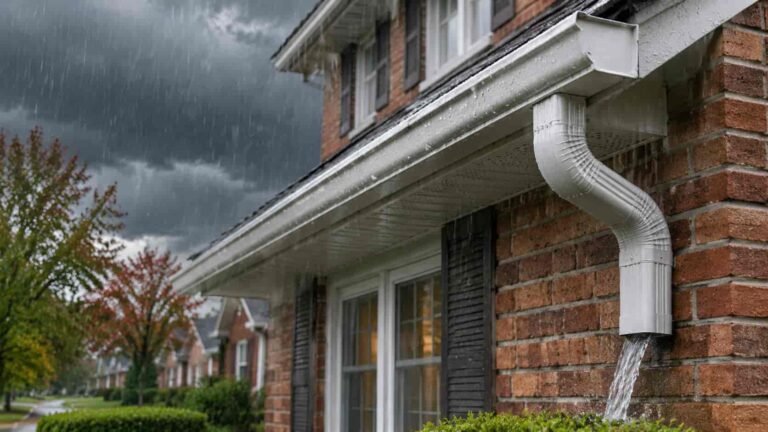
Gutters collect the water that falls on your roof and send it somewhere safe. When they overflow, water drops beside your foundation, soaks fascia and soffits and can find its way into the basement.
The Insurance Bureau of Canada lists keeping downspouts free of debris and directing water away from the house as steps that help prevent basement flooding and ice damming on the roof (IBC, 2026). The same article does not mention gutters directly, so that advice covers downspouts and drainage.
- Overflowing gutters pour water beside the foundation
- Sagging sections hold water and pull away from the fascia
- Blocked downspouts back water up onto the roof edge
- Short downspouts dump water beside basement walls
When Should You Check Your Gutters Before Heavy Rain?
Check them before spring rain, after leaf fall in autumn and whenever a heavy rainfall warning is issued. A quick look takes ten minutes and a long look takes an hour, so do the quick look before every forecast storm.
In practice, the best time is on a dry day, 24 to 48 hours before the forecast storm, so there is time to fix anything you find.
| When | What to check |
|---|---|
| Early spring | Winter damage, loose brackets, ice-damaged sections |
| Before a forecast storm | Clear outlets, downspout flow and extensions |
| Late autumn | Leaves and seeds from nearby trees, then flush the downspouts |
| After a storm | Overflow marks, bent sections, wet spots on fascia |
What Should You Check on Your Gutters Before Rain?
Check five things: debris, slope, fasteners, seams and outlets. If any of these fail, the gutter cannot move water as designed, and the problem tends to show up in the first heavy downpour.
Debris
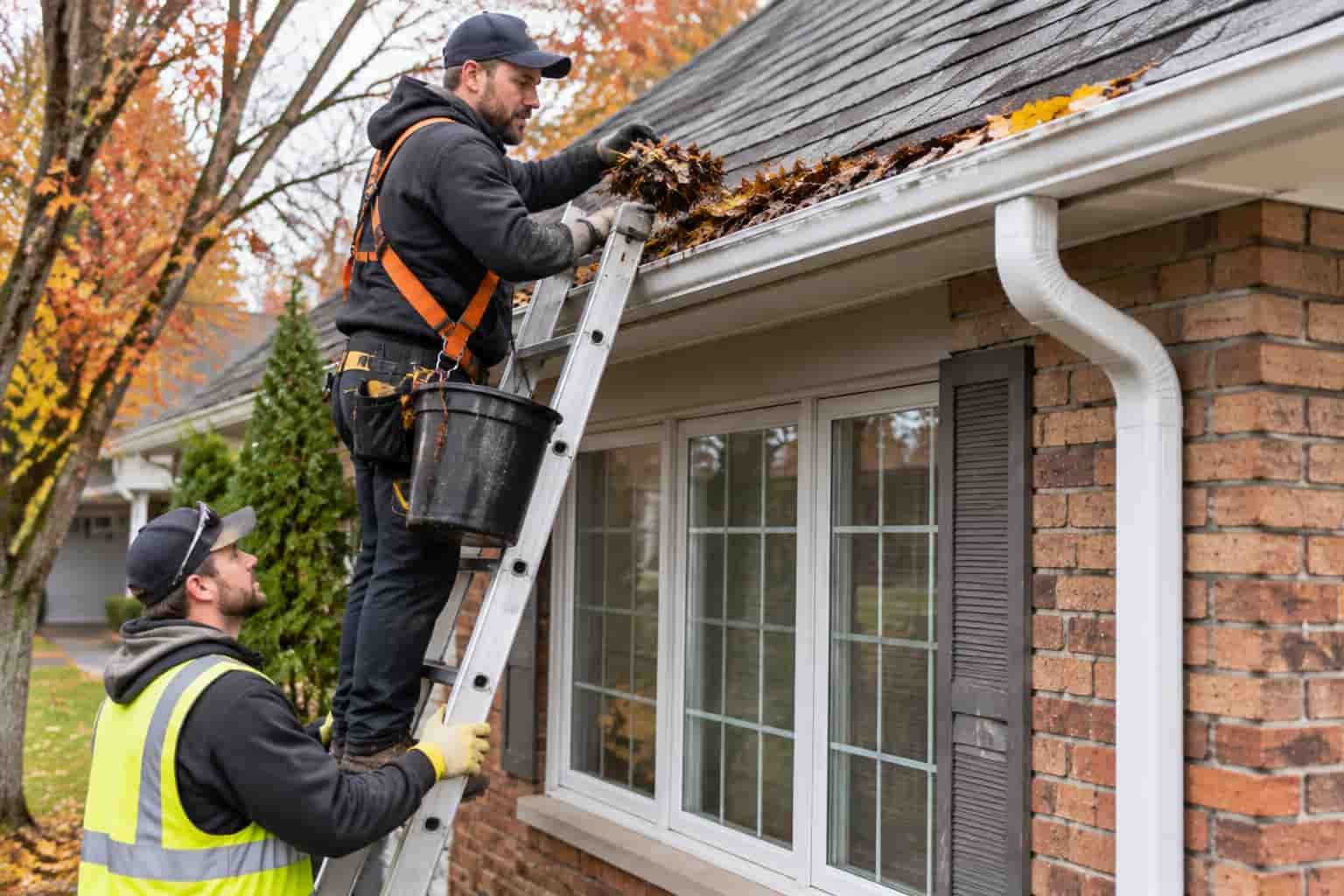
Look for leaves, seeds, shingle grit and moss. Even a thin layer can block outlets and hold water against the roof edge.
Slope and Sagging
Gutters should slope gently toward the downspout. If water pools in the middle of a run, the slope is wrong or a bracket has failed.
Fasteners and Brackets
Push gently on the gutter from below. A loose section that moves easily needs re-securing before wind and heavy water add load.
Seams and Joints
Look for drips, rust stains or sealant that has cracked. Leaking seams spill water down the wall and along the foundation.
Outlets
Make sure the hole leading to the downspout is clear. Outlets are the most common place for blockages.
If you see damage during your checks, read our guide to the signs you need gutter repair.
How Do You Prepare Downspouts for Heavy Rain?
Flush them with a hose, check that water flows out freely, and make sure they discharge away from the house. The IBC advises keeping downspouts free of debris and directing water away from the house (IBC, 2026).
Should downspouts be checked before storms? Yes. A blocked downspout turns the whole gutter run into a bucket, and the weight can pull it off the fascia.
What Does Toronto Require for Downspouts?
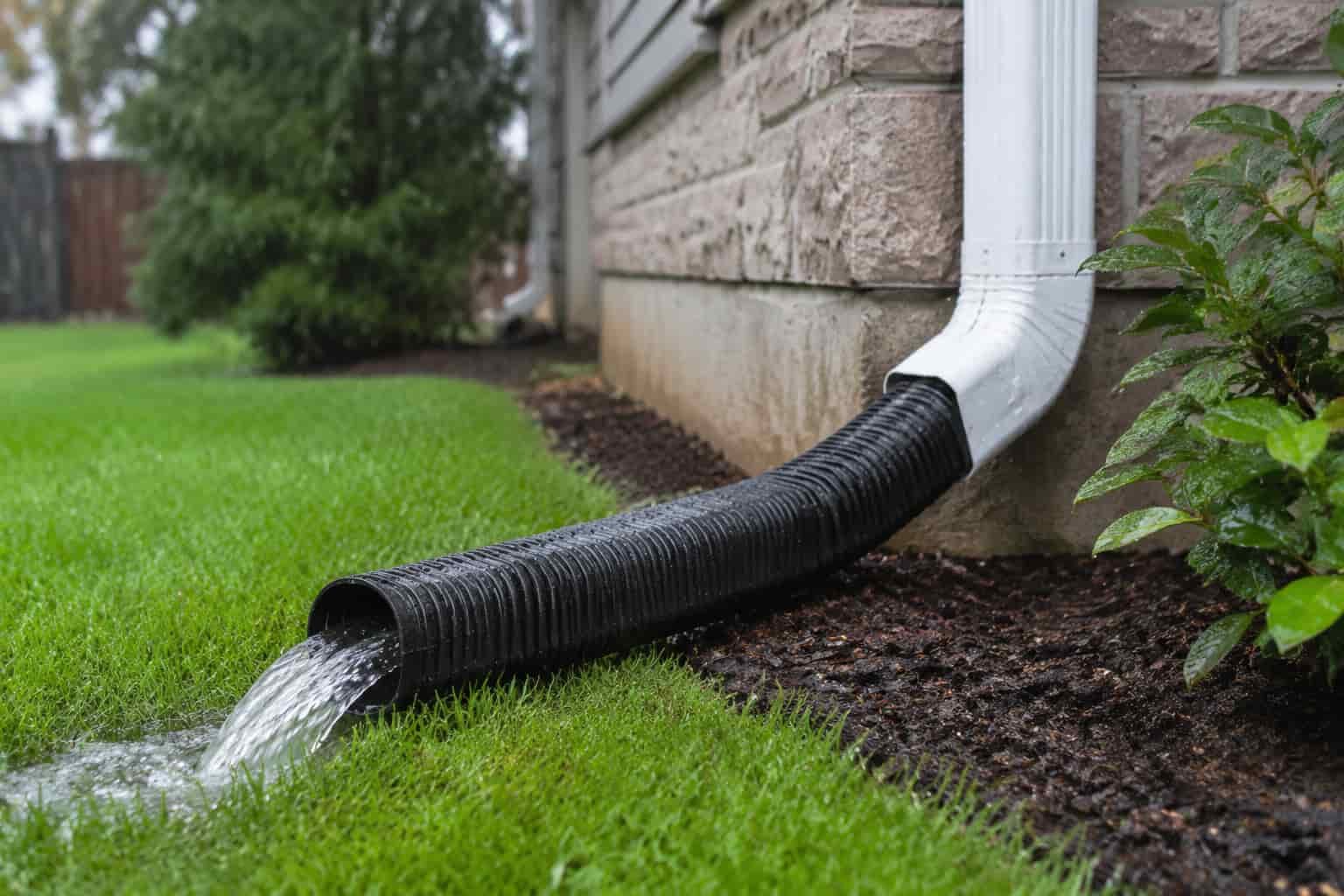
The City of Toronto says it is mandatory for all property owners to ensure their downspouts are disconnected from the City’s sewer system. Water should flow away from foundation walls, and extensions should carry it away from the house and foundation (City of Toronto, 2025).
The page says disconnecting downspouts helps reduce the chance of basement flooding, because heavy rain can overload the sewers. It also notes exemptions where disconnection is hazardous or not technically feasible, and financial assistance of up to $500 for eligible low-income seniors and persons with disabilities (City of Toronto, 2025). Check the City page for your situation, or call 311.
How Far Should Water Be Carried Away?
The City page does not give a fixed distance. Extend downspouts so water lands well away from the foundation, and make sure the ground slopes away from the house, not toward it. If you are unsure, ask a professional to assess your property.
How Do You Protect Gutters During Storms?
Prepare before the storm, because you should not climb a ladder in heavy wind or rain. Secure loose parts, trim branches and clear debris while it is dry and calm.
- Trim branches that overhang the roof and could break off
- Secure loose downspout sections and extensions
- Clear gutters of leaves and seeds
- Check that gutter guards, if installed, are firmly in place
- Bring loose items near the foundation, such as planters, out of the water path
If you already have leaf protection, read what is gutter guard installation to understand what guards can and cannot do. They reduce debris but still need an occasional check.
Can Storms Damage Gutters?
Yes. High winds, falling branches, heavy water and ice can bend, loosen or detach gutters. Damage is more likely on older systems with weak brackets or sections that already sag.
| Storm risk | Possible damage | Prevention |
|---|---|---|
| High wind | Loose or detached sections | Check brackets, re-secure sections |
| Falling branches | Dents, bends, broken hangers | Trim overhanging branches |
| Heavy rain | Overflow, sagging under weight | Clear debris, check slope and outlets |
| Freeze-thaw and ice | Cracked seams, bent sections | Repair in spring, clear before winter |
These risks are general, and the exact damage depends on the age and material of your system.
How Do You Do the Check Safely?
Use a stable ladder on firm ground, have someone hold it, and never work in wet, windy or icy conditions. Ladder work carries real risk, so be honest about your comfort with heights.
- Do not lean the ladder against the gutter itself
- Keep three points of contact on the ladder
- Stay away from power lines and service cables
- Skip two-storey work if you are not confident
- Use a hose from the ground to test downspout flow
For roofs and second storeys, a professional is the safer choice.
What Does a Professional Gutter Prep Include?
A professional visit usually includes clearing the gutters, flushing the downspouts, checking fasteners and seams, and noting repairs. It saves you the ladder work and often includes a clear report of anything that needs attention.
At Silkwaters Windows & Eaves Cleaning, eavestrough cleaning is one of the main services, and our guide to what is eavestrough cleaning explains what the work involves.
How Much Does Gutter Preparation Cost in Toronto?
HomeStars lists eavestrough cleaning at $1.00 to $2.50 per linear foot, gutter guards at $7 to $20 per linear foot, downspouts at $100 to $300 each and repairs at $75 to $150 per hour (HomeStars, 2026). Your total depends on the length of your gutters, the height of your home and the condition of the system.
| Service | Typical cost (HomeStars, 2026) |
|---|---|
| Eavestrough cleaning | $1.00 to $2.50 per linear foot |
| Gutter guards | $7 to $20 per linear foot |
| New gutters | $5 to $15 per linear foot |
| Downspouts | $100 to $300 each |
| Repairs | $75 to $150 per hour |
For a worked example, see our eavestrough cleaning cost in Toronto guide. These are ranges, not quotes, so ask for a written estimate.
Should You Repair, Replace or Add Guards Before Storm Season?
Repair small problems, replace sections that are failing, and consider guards if debris is a constant problem. If your gutters sag, leak at multiple seams or have rotted fascia behind them, repair may not be enough.
Spring and early summer are good times to do larger work, because the weather is milder and the roof edge is dry. Autumn jobs are possible but depend on weather and availability.
How Do Trees and Ravines Affect Gutter Prep?
Homes under mature trees, or near ravines such as the Don Valley, Humber River and Rouge, collect more leaves, seeds and twigs. That means more frequent clearing and closer checks of outlets.
If your property has a heavy canopy, check before storms and after leaf fall, and ask whether guards make sense for your roof and trees.
How Do You Test That Water Is Draining Properly?
Run a hose into the gutter from the high end and watch the flow. Water should travel steadily to the downspout and leave through the extension without pooling, dripping from seams or spilling over the front edge.
If water stands in the gutter, backs up at the outlet or runs down the wall, mark the spot and fix it before the next storm. This simple test shows more than a visual check from the ground.
What Should You Do After a Storm?
Walk around the house once the rain stops and look for overflow marks, bent sections, loose downspouts and wet patches on fascia or walls. Do this from the ground first, before you climb anything.
- Look for debris that has blocked outlets
- Check that extensions are still in place and pointing away from the house
- Check the basement and foundation for new damp patches
- Photograph any damage before you repair it, in case you need it for insurance
- Book a repair or inspection if anything looks loose or cracked
How Does Storm Season Change Through the Year in the GTA?
Storm risk is not limited to summer. Spring brings heavy rain and melting snow, summer brings thunderstorms, and autumn adds leaf-clogged gutters just as the weather turns wet. Winter freeze-thaw cycles can damage gutters that then fail in the next rain.
| Season | Main gutter risk | Best action |
|---|---|---|
| Spring | Winter damage and heavy rain | Inspect and repair |
| Summer | Thunderstorms and fast downpours | Clear outlets and check downspouts |
| Autumn | Leaves, seeds and wet weather | Clean after leaf fall |
| Winter | Ice and freeze-thaw damage | Prepare before the first freeze |
What Mistakes Do Homeowners Make Before Storms?
The most common mistakes are waiting for the storm, ignoring the downspouts and leaving short extensions in place. Fixing these costs far less than repairing water damage.
- Cleaning only the gutters and ignoring the downspouts
- Leaving downspouts that discharge beside the foundation
- Assuming gutter guards mean no maintenance at all
- Working on a ladder in wet or windy weather
- Ignoring small leaks and sagging until after a storm
Is Gutter Prep Part of a Wider Flood Plan?
Yes. The IBC also advises keeping floor drains and street storm sewer grates clear, installing a backwater valve where possible, checking that your sump pump works and has backup power, and limiting household water use during heavy rain (IBC, 2026).
Gutter care is one part of that plan. Basement water damage from sewer backup is covered only with optional sewer backup coverage, so check your home insurance policy (IBC, 2026).
Frequently Asked Questions
How do I prepare my gutters for heavy rain? Clear debris, flush the downspouts, check slope and fasteners, and make sure water is carried away from the foundation.
Should downspouts be checked before storms? Yes. Blocked downspouts cause overflow, and the IBC advises keeping them free of debris (IBC, 2026).
Can storms damage gutters? Yes. Wind, branches, heavy water and ice can loosen, bend or detach gutters.
How often should I clean my gutters? Typically in spring and autumn, plus after storms. Homes with many trees may need more frequent cleaning.
Do I have to disconnect my downspouts in Toronto? The City says it is mandatory for all property owners to disconnect downspouts from the City sewer system, with possible exemptions (City of Toronto, 2025).
How much does gutter cleaning cost in Toronto? HomeStars lists $1.00 to $2.50 per linear foot (HomeStars, 2026).
Do gutter guards remove the need for maintenance? No. They reduce debris, but outlets and downspouts still need checking.