TL;DR
- Professional window cleaning covers glass, frames, sills, tracks and screens, not just a quick wipe of the pane.
- Most professionals now use purified water-fed pole systems, which leave glass streak-free without any soap residue at all.
- Interior and exterior cleaning use different techniques, since exterior glass deals with weather, height and access.
- In the GTA, timing matters as much as technique, since winter salt spray and spring pollen both leave residue that regular cleaning misses.
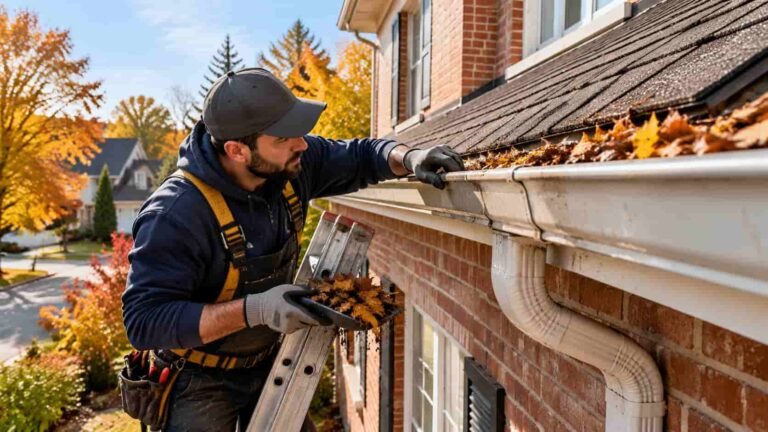
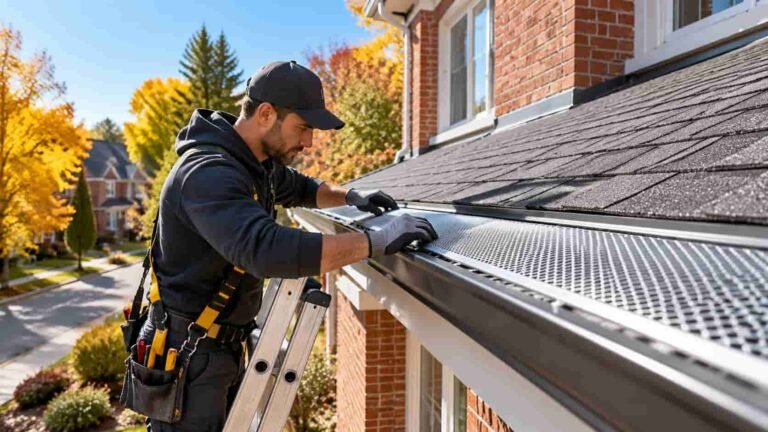
- Bundling window cleaning with eavestrough cleaning in the same visit is common, since both jobs often need the same access equipment.
What Professional Window Cleaning Actually Involves
Professional window cleaning is a specialised service that removes dirt, dust, fingerprints, water spots and environmental residue from glass, frames, sills, tracks and screens, not just the visible pane itself. Unlike a quick wipe with a household spray, it uses purpose-built tools and a systematic process designed to leave zero residue behind (Squeegee Squad industry guidance, 2024). The goal isn’t just clean glass, it’s glass that stays clear longer because the frame, track and sill around it were treated properly too.
The Tools and Technique Behind a Streak-Free Finish
Most people assume streak-free windows come down to the cleaning product used, but technique matters more than the spray bottle. Professional cleaners work from top to bottom on every pane, so dislodged dirt and dripping water never fall onto glass that’s already been cleaned. A squeegee held at roughly 45 degrees, pulled in one continuous stroke, does the actual work of lifting solution cleanly off the glass, with the blade wiped dry between passes to stop drip lines forming.
Purified Water-Fed Pole Systems Explained
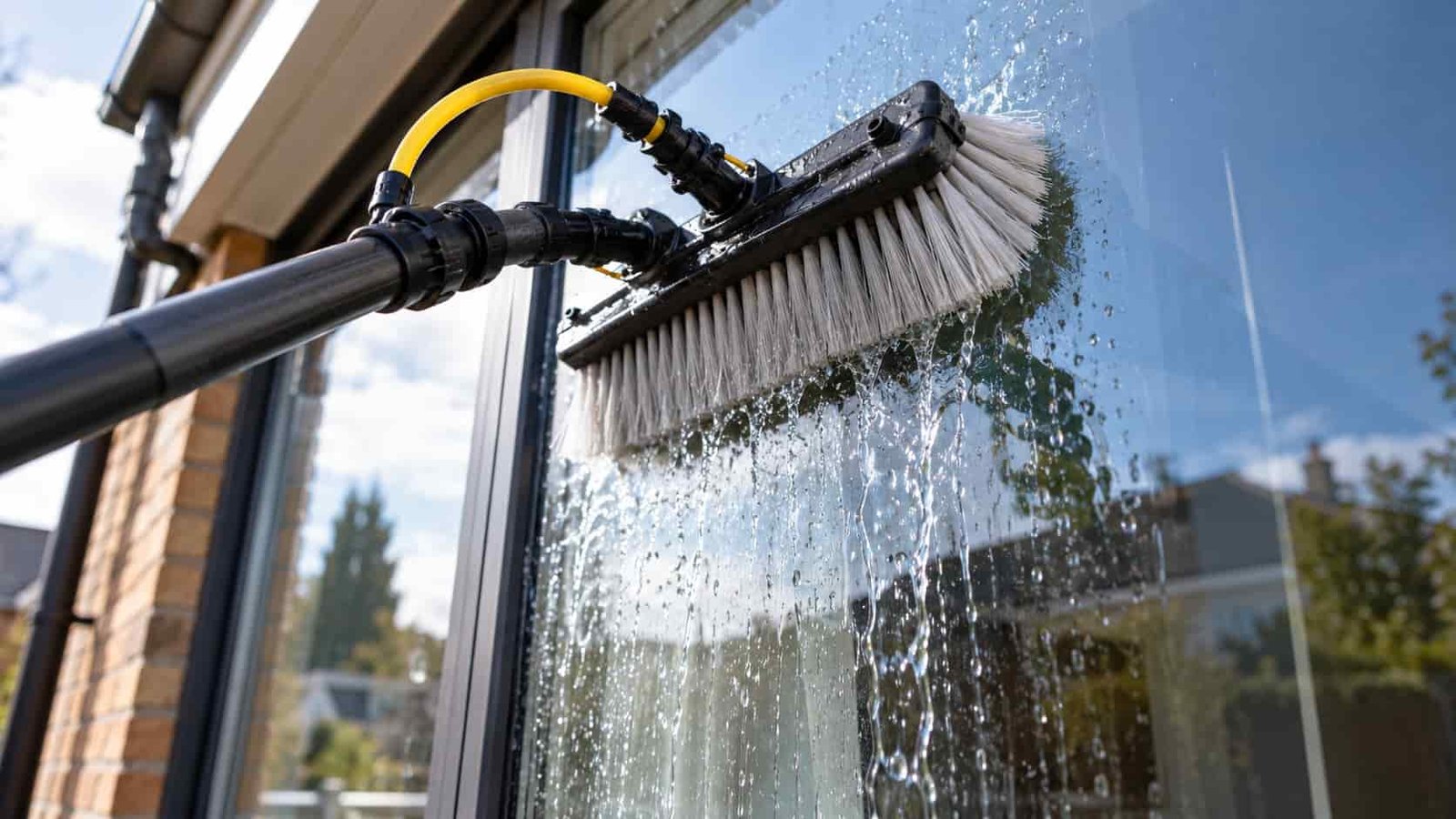
This is the part most basic guides gloss over, even though it’s become the standard method for most professional exterior work. A water-fed pole system runs tap water through a filtration process (typically reverse osmosis or deionisation) that strips out the minerals responsible for streaks and spotting in the first place. The purified water is then applied through a soft brush on an extendable pole and left to air dry, since mineral-free water dries completely clear without any wiping needed at all.
In practice, this system is what makes second and third story exterior windows realistic to clean safely and thoroughly, since it removes the need for a ladder against the glass for most standard height properties. It’s also why some window cleaning appointments look deceptively simple. The pole and brush work is straightforward, but the water treatment behind it is doing the actual technical work.
Interior vs Exterior Window Cleaning
These two halves of a full job use different tools and face different challenges, which is why most professional quotes price them separately or as a combined package.
| Interior cleaning | Exterior cleaning | |
| Main challenge | Fingerprints, dust, condensation marks | Weather residue, height, outdoor grime |
| Typical tools | Microfibre cloth, squeegee, mild solution | Water-fed pole, purified water, extension equipment |
| Access needs | None beyond the room itself | Ladders, poles, or platform access for upper floors |
| Frequency | Every 3 to 6 months for most homes | Every 6 to 12 months, more often near busy roads |
Frames, sills and tracks get cleaned as part of both sides of the job, since dirt trapped there is often what re-contaminates freshly cleaned glass within days if it’s skipped.
Why This Is a Job Best Left to Professionals
Beyond the finish quality, safety is the practical reason most homeowners eventually stop doing this themselves. Professional cleaners work to recognised safety standards for working at height, using proper ladders, harnesses or water-fed systems designed for the job, which meaningfully reduces the fall risk that comes with an amateur balancing on a ladder against a second story window (Squeegee Squad safety guidance, 2024). There’s also a real risk of scratching glass with the wrong tool or an abrasive cloth, particularly on tempered or coated glass, which a trained technician is trained to recognise before starting.
In practice, the properties that benefit most from professional cleaning aren’t just tall buildings. Older homes with wavy or original glass, and newer homes with reflective or low-E coatings, both need different handling than a standard pane, which is easy to miss without training.
Why Timing Matters More in the GTA Than Most Guides Admit
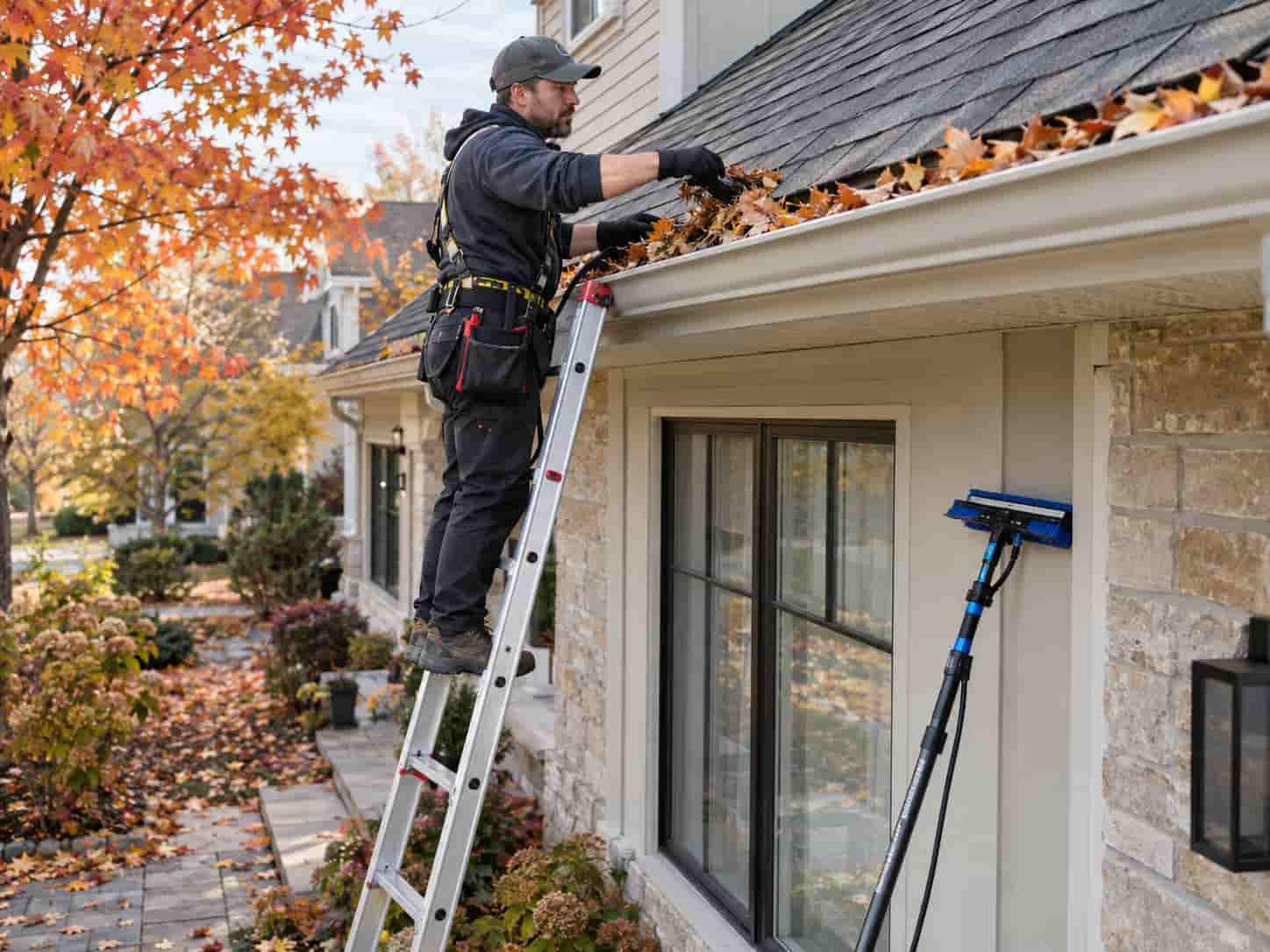
Generic window cleaning content is written as if climate doesn’t change the calendar, but in Toronto and the GTA it genuinely does. Winter road salt gets kicked up onto lower windows and can etch glass if left to sit for months, so an early spring clean matters more here than in drier climates. Pollen buildup follows shortly after in late spring, and by fall, exterior glass and eavestroughs both collect leaf debris at the same time, which is exactly why many GTA properties schedule window cleaning and eavestrough cleaning together rather than as separate visits.
Window Cleaning and Eavestrough Cleaning Often Go Together
This connection gets missed in most window cleaning guides, even though it’s one of the most practical reasons to bundle services. Both jobs typically need the same ladder or pole access to the upper part of a property, so scheduling them in the same visit is more efficient than paying for separate access setups twice. It also means gutters get checked for debris at the same time windows are being cleaned, which catches early blockages before they cause water damage to the roofline, siding or foundation.
Post-Construction Window Cleaning
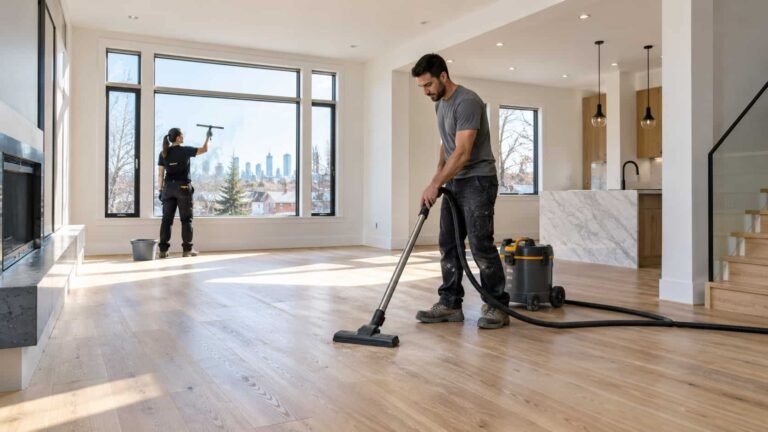
This is a distinct category worth understanding separately, since it’s not the same job as routine maintenance cleaning. New construction and renovation work leaves behind paint splatter, adhesive residue, drywall dust and construction film that ordinary cleaning tools aren’t designed to remove. Post-construction window cleaning typically uses razor scraping for stuck-on residue in addition to the standard water-fed and squeegee process, and it’s usually priced separately from a routine clean given the extra time involved.
How Often Professional Window Cleaning Is Actually Needed
Most residential properties do well with an exterior clean twice a year and an interior clean once or twice a year, though this varies by location and property type. Homes near busy roads, construction sites, or directly on the waterfront tend to need more frequent attention, since airborne residue builds up faster in those conditions. Commercial storefronts, by comparison, are often cleaned weekly or biweekly, since first impressions matter more immediately in a retail setting.
Frequently Asked Questions
What’s included in a standard professional window cleaning service?
Most services include the glass itself, plus frames, sills and tracks, both inside and out depending on the package booked.
Is water-fed pole cleaning as effective as traditional squeegee cleaning?
Yes, and for most exterior work it’s now considered the more reliable method, since purified water dries completely streak-free without any wiping needed.
How much does professional window cleaning typically cost?
Pricing depends on the number of panes, property height and whether interior, exterior or both sides are included, so most companies provide a free on-site or virtual estimate.
Can professional window cleaning damage older or original glass?
When done correctly, no. Trained technicians adjust technique and tools for older, wavy or coated glass, which is one of the main risks of DIY cleaning on these surfaces.
Should window cleaning and eavestrough cleaning be booked together?
Many homeowners do book them together, since both typically require the same access equipment and often line up with the same seasonal timing.
How soon after home construction should windows be professionally cleaned?
Post-construction cleaning is usually booked as soon as major work finishes, since paint and adhesive residue only get harder to remove the longer they sit.