
If you own a home in the GTA, you’ve probably asked yourself how often should you clean gutters in Toronto at least once — usually while standing in the rain watching water pour over the side of your eavestrough instead of through the downspout. It’s a fair question, and the answer isn’t quite as simple as “once a year” or “whenever it looks bad.”
Toronto’s climate makes gutter maintenance more demanding than in many other parts of the country. Heavy spring and summer rainfall puts real pressure on your drainage system. Fall brings a steady blanket of maple, oak, and other leaves that can clog eavestroughs within weeks. And once winter arrives, freeze-thaw cycles turn even a small amount of trapped debris into a much bigger problem — ice dams, cracked seams, and water finding its way somewhere it shouldn’t.
So how often should you clean gutters in Toronto to actually stay ahead of all this? The answer depends on a few things: your roofline, the trees around your property, and how your home has performed in past seasons. Keep reading, because the right schedule for your house might be different than you think.

How Often Should You Clean Gutters in Toronto?
The short answer is that most Toronto homes should have their gutters cleaned twice a year — once in late spring and once in the fall. This two-cleaning rhythm lines up well with the city’s weather patterns: it clears out the seed pods and winter debris that accumulate through spring, and it removes the heavy leaf load before the first hard freeze locks everything in place.
That said, how often should you clean gutters in Toronto really comes down to timing as much as frequency. Cleaning your gutters in July, for example, does very little to protect your home if the real debris buildup happens in October and November. A well-timed fall cleaning — done after most leaves have dropped but before the first freeze — is often more valuable than an extra cleaning at the wrong time of year.
Some homes need more than the standard two cleanings. If your property is surrounded by mature trees, sits under a steep or complex roofline, or has a history of clogs and overflow, you may need a mid-season check or an additional cleaning in late fall. Homes with well-maintained gutter guards, on the other hand, may be able to stretch that schedule slightly — though even guarded systems still need periodic inspection.
In short: twice a year is the baseline, timing matters as much as the count, and your specific property may call for adjustments either way.
Why Toronto Homes Need Regular Gutter Maintenance
Toronto’s climate is a big part of why gutter maintenance can’t be an afterthought. The city sees a genuine mix of heavy rain events, humid summers, and cold winters — and each season adds its own kind of stress to your eavestrough system.
Freeze-thaw cycles are one of the biggest culprits. When water sits in a clogged gutter and temperatures dip below freezing overnight, it expands as it turns to ice. That expansion can pull fasteners loose, warp gutter sections, and create ice dams that force water back up under your roof shingles. A gutter that was only mildly clogged in November can become a much more serious problem by February.
Heavy rainfall is another factor. Toronto gets a substantial share of its annual precipitation in short, intense bursts during spring and summer storms. A gutter system that’s even partially blocked can’t move that volume of water fast enough, which leads to overflow along your fascia, siding, and foundation walls.
Tree debris compounds both of these issues. Leaves, seed pods, twigs, and needles don’t just block water flow — they hold moisture against the metal or vinyl of your gutters, which can accelerate wear and corrosion over time.
Finally, all of this ties back to foundation protection. Gutters exist to move water away from your home’s foundation. When they’re clogged or damaged, that water often ends up pooling right where you don’t want it — next to your basement walls. Over years, this kind of chronic overflow is one of the more common (and avoidable) contributors to basement moisture and foundation issues in older Toronto homes.
Best Time of Year to Clean Gutters in Toronto
Knowing when to clean gutters in Toronto is arguably more useful than just knowing how many times a year to do it. The best time to clean gutters generally falls into two windows: late spring and mid-to-late fall.
Spring Gutter Cleaning
Spring gutter cleaning is about resetting your system after winter. Even if your gutters were clear going into December, months of freezing temperatures, wind, and melting snow tend to leave behind a mix of grit, small branches, and winter debris.
Spring is also when many trees release seed pods, catkins, and early pollen buildup, all of which can settle into your gutters and form a light but stubborn sludge. Cleaning this out in April or May — before Toronto’s heavier spring rains arrive — helps your system handle the storm season without backing up.
A good spring cleaning also gives you a chance to spot any damage that occurred over the winter, such as loosened brackets or minor sagging, while repairs are still straightforward.
Fall Gutter Cleaning
Fall gutter cleaning is, for most Toronto properties, the more important of the two seasonal cleanings. This is when maple leaves, oak leaves, and other seasonal debris come down in large volumes, often over just a few weeks in October and November.
The goal with fall cleaning is to time it after the majority of leaves have dropped, but before the first sustained freeze. Clean too early, and you’ll likely need a second pass once the rest of the leaves fall. Clean too late, and you risk dealing with gutters that are already partially frozen or clogged with wet, compacted leaves.
Fall cleaning also directly prevents winter problems. A clear gutter system going into December is far less likely to develop the ice dams and freeze-related damage discussed earlier — which is why this cleaning matters more for long-term protection than almost any other maintenance task on your fall checklist.
If you’re deciding whether to bring in a professional for this seasonal push, it’s worth understanding gutter cleaning cost Toronto homeowners typically pay, so you can weigh the investment against the risk of winter damage.

Toronto Gutter Cleaning Schedule: Month-by-Month Guide
If you’d rather follow a simple gutter cleaning schedule than think about it season by season, here’s a straightforward month-by-month guide for a typical Toronto home.
| Month | Recommended Action | Reason |
| March–April | Inspect gutters; clean if needed | Clears winter debris and grit before spring rains begin |
| May–June | Full spring cleaning | Removes seed pods, pollen buildup, and prepares gutters for peak rainfall season |
| September–October | Inspect gutters; light clean if trees are dropping early | Some properties see early leaf drop depending on tree species |
| November | Full fall cleaning | Clears leaf buildup before the first hard freeze locks debris in place |
This schedule works well as a default, but it’s a starting point rather than a fixed rule. Homes with heavy tree coverage, older gutter systems, or a history of clogging may need to adjust the timing or add an extra inspection.
If you want a refresher on the actual process, our guide on how to clean eavestroughs walks through the basics for homeowners who prefer a DIY approach.
How Trees Affect Your Gutter Cleaning Frequency
Not every Toronto property faces the same debris load, and trees are the single biggest variable. If you’re wondering how often should you clean gutters with trees nearby, the honest answer is: more often than a home without significant tree coverage.
Maple trees, extremely common across Toronto neighbourhoods, drop a large volume of broad leaves over a relatively short window in fall, along with winged seed pods (often called “helicopters”) in late spring. Both can clog gutters quickly.
Oak trees tend to shed later into the season, sometimes holding onto leaves into November or even December. This can push your ideal fall cleaning date later than it would be for a property without oaks nearby.
Pine and other coniferous trees create a different kind of problem. Needles are small enough to slip past some gutter guards and can form a dense mat that’s surprisingly difficult to clear, even though the volume looks smaller than a pile of leaves.
Homes surrounded by mature trees — particularly a mix of species — often benefit from three cleanings a year rather than two: one in spring, one mid-fall for early leaf drop, and one in late fall once everything has come down. If your property backs onto a ravine, park, or mature tree canopy, this extra cleaning is usually a worthwhile trade-off against the risk of ice damming.

Signs Your Gutters Need Cleaning
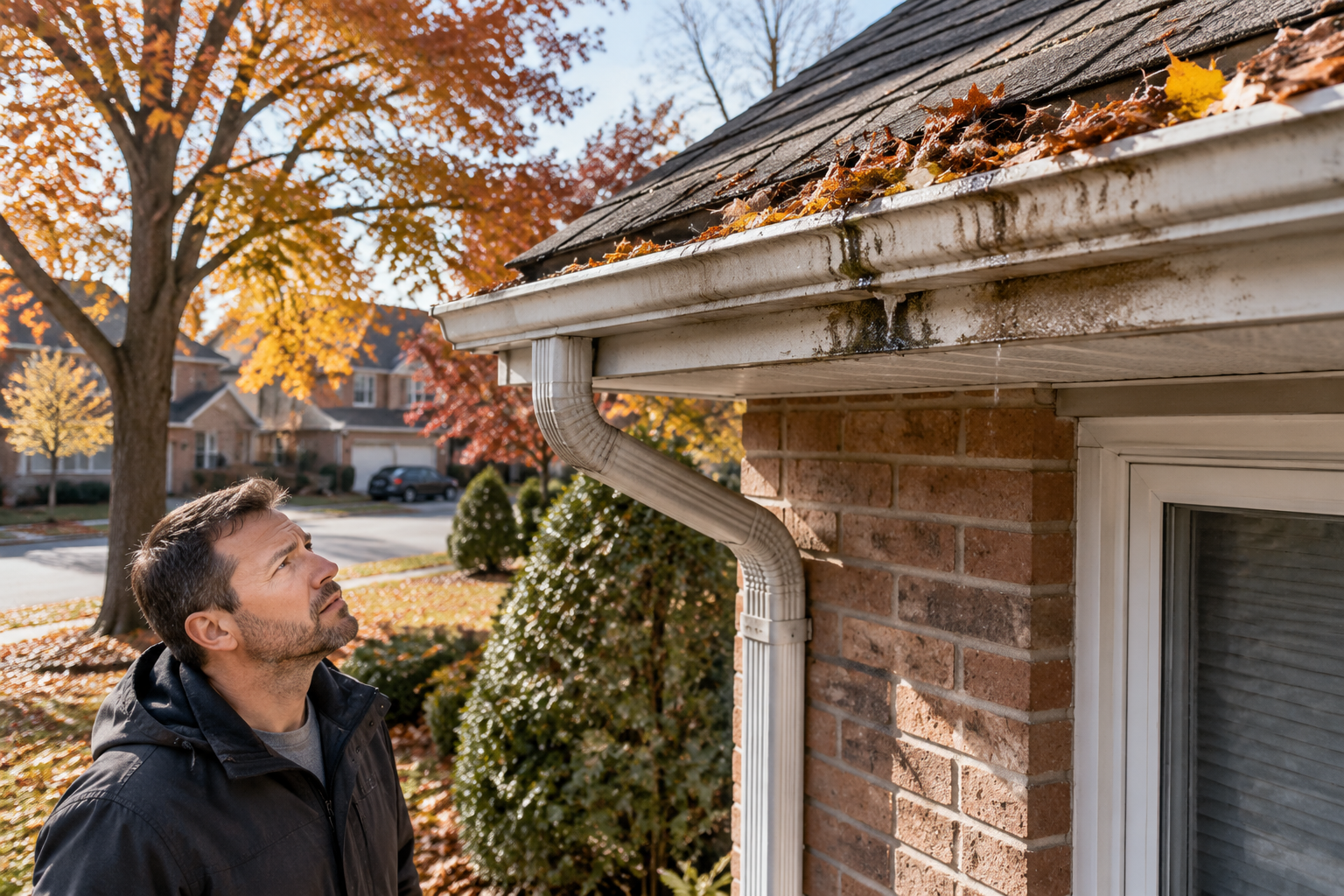
Beyond a fixed schedule, it helps to know the signs gutters need cleaning so you can act before small issues turn into bigger repairs. Watch for:
- Overflowing gutters during or after rainfall, where water spills over the edge instead of flowing through the downspout
- Water stains on your fascia board, siding, or brick just below the gutter line
- Sagging gutters that pull away from the roofline, often a sign of trapped water weight
- Plants or grass growing inside the gutters, which means organic debris has been sitting long enough to decompose
- Basement moisture or dampness along foundation walls, especially after heavy rain
- Ice buildup or visible icicles forming along the roof edge in winter, which can indicate a developing ice dam
If you notice more than one of these signs at the same time, it’s usually a good indication that your current schedule isn’t keeping up with your property’s actual debris load.
Do Gutter Guards Reduce Cleaning Frequency?
Gutter guards are a common question for homeowners trying to cut down on maintenance, and the honest answer is: they help, but they don’t eliminate the need for cleaning altogether.
Gutter guards work by blocking larger debris — leaves, twigs, and larger seed pods — from entering the gutter channel in the first place. This can meaningfully reduce how often you need a full cleaning, particularly for homes with heavy maple or oak coverage.
However, gutter guards don’t stop everything. Fine debris like pine needles, roof grit, and wind-blown dust can still make it through many guard designs, and this material can build up slowly over a year or more without being obvious from the ground. Guards can also become partially covered by debris sitting on top of them, which reduces their effectiveness without necessarily being visible.
For this reason, homes with gutter guards should still schedule an annual inspection, even if a full cleaning isn’t needed every time. If you’re weighing whether guards make sense for your property, our article on are gutter guards worth it breaks down the costs and trade-offs in more detail.
Can You Clean Gutters Too Often?
It’s possible to overdo gutter cleaning, though it’s a less common problem than under-cleaning. Cleaning gutters that have little to no debris buildup doesn’t provide much benefit and, if done carelessly, can occasionally cause more wear on fasteners and seams than leaving them alone.
Rather than cleaning on a rigid schedule regardless of conditions, it’s worth doing a quick visual check before each planned cleaning. If a spring cleaning reveals minimal debris, you may be able to push the next cleaning slightly later in the season. On the other hand, if a home consistently shows heavy buildup between cleanings, that’s a sign the schedule should be adjusted upward rather than left as-is.
The goal isn’t to hit a specific number of cleanings each year — it’s to keep your gutters functioning properly based on what your property actually needs.
Final Recommendation: How Often Should You Clean Gutters in Toronto?
So, how often should you clean gutters in Toronto, in practical terms?
- Standard homes with average tree coverage: twice a year, in late spring and mid-to-late fall.
- Homes with mature trees or heavy seasonal leaf drop: three cleanings a year, adding a mid-fall check between the spring and late-fall cleanings.
- Homes with well-maintained gutter guards: an annual full cleaning plus a periodic inspection, since guards reduce — but don’t remove — the need for maintenance.
Toronto’s mix of heavy rainfall, dense tree cover in many neighbourhoods, and cold winters means gutter maintenance isn’t a task you can set and forget. But with the right seasonal timing, most homeowners can protect their roofline, siding, and foundation without overcomplicating their maintenance routine.
Frequently Asked Questions
How many times a year should gutters be cleaned? Most homes should be cleaned twice a year — once in spring and once in fall. Properties with heavy tree coverage may need a third cleaning in mid-fall to manage early leaf drop.
Is cleaning gutters once a year enough? For some low-debris properties with few nearby trees, an annual cleaning may be sufficient. However, most Toronto homes benefit from two cleanings, since a single annual clean often leaves gutters exposed to either spring debris or fall leaf buildup for extended periods.
Should gutters be cleaned before winter? Yes. A fall cleaning, done after most leaves have dropped but before the first hard freeze, is one of the most important maintenance steps for preventing ice dams and freeze-related damage over the winter.
How do I know if my gutters need cleaning? Look for overflowing water during rain, sagging sections, water stains on your fascia or siding, plants growing in the gutter channel, or basement dampness after storms. Any of these signs suggests it’s time for an inspection or cleaning.