
If you’ve spent a fall weekend on a ladder scooping wet leaves out of your eavestroughs, you’ve probably asked yourself: are gutter guards worth it? Toronto’s climate makes this a fair question. Between heavy autumn leaf drop, spring debris, freezing rain, and sudden downpours, gutters here take a beating throughout the year.
Clogged gutters aren’t just an inconvenience. They can lead to water pooling near your foundation, ice damming in winter, and damage to fascia boards and siding. It’s no surprise that more homeowners are looking into gutter guards as a way to reduce seasonal maintenance and protect their homes.
But gutter guards aren’t a one-size-fits-all solution, and they don’t eliminate maintenance entirely. In this guide, we’ll break down what gutter guards are, how they work, the real pros and cons, and help you decide whether they make sense for your Toronto home. By the end, you’ll have a clear, honest answer to whether are gutter guards worth it for your specific situation.

What Are Gutter Guards?
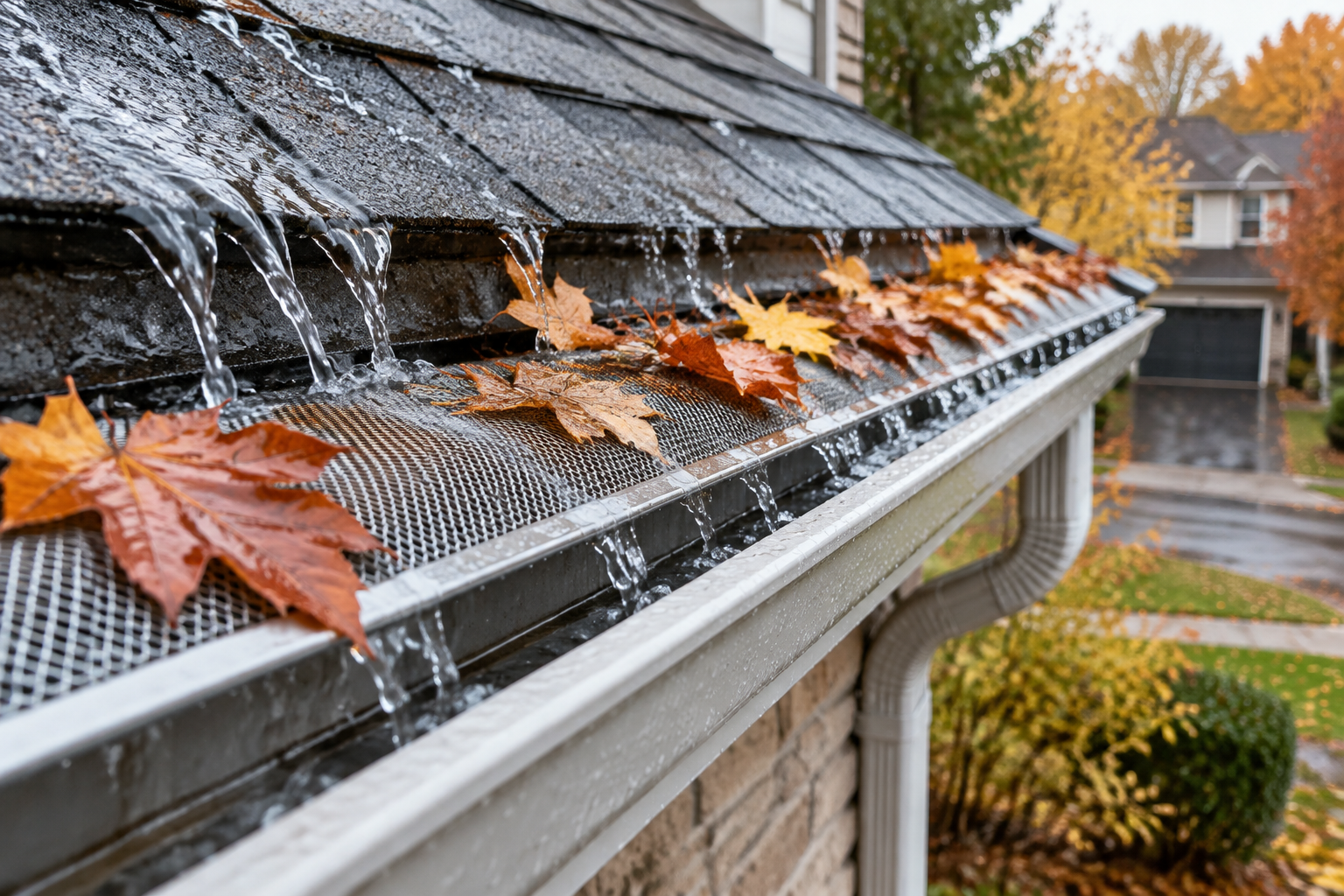
Gutter guards are covers or inserts installed on top of your existing eavestroughs. Their main job is to keep leaves, twigs, seeds, and other large debris from entering and blocking the gutter channel, while still allowing rainwater to flow through and drain properly.
Most gutter guards sit directly over the gutter opening or attach along the front lip and under the roof shingles. Water flows over or through the guard’s surface and into the gutter below, while larger debris is meant to slide off the roof or blow away.
Homeowners typically install gutter guards for a few key reasons:
- To reduce how often gutters need to be cleaned
- To lower the risk of clogs during heavy leaf-fall seasons
- To prevent water overflow that can damage siding, fascia, and landscaping
- To reduce the need for ladder work on multi-storey homes
While gutter guards can meaningfully reduce debris buildup, it’s important to understand that “reduce” doesn’t mean “eliminate.” Fine particles like pine needles, seeds, and roof grit can still find their way into gutters over time, which is why occasional maintenance is still part of the picture.
How Do Gutter Guards Work and Are They Effective?
Understanding how do gutter guards work helps explain why some homeowners see great results while others are disappointed. At a basic level, every gutter guard design uses surface tension, angle, or mesh size to separate water from debris.
Rainwater clings to the surface of the guard and follows the curve or angled design down into the gutter channel. Leaves and larger debris, which don’t behave the same way as water, slide off the edge or sit on top of the guard until wind or rain clears them away. Mesh and screen designs work a bit differently, using small holes or a fine weave to physically filter out debris while letting water pass through.
So do gutter guards work? In most cases, yes, particularly for larger debris like leaves, twigs, and branches. However, whether they’re fully effective depends on several factors:
- Gutter condition: Guards installed over damaged, sagging, or improperly sloped gutters won’t perform well, since the underlying drainage issue is still there.
- Installation quality: A poorly fitted guard can leave gaps where debris enters, or create a pitch that causes water to overshoot the gutter entirely.
- Surrounding trees: Homes near pine, cedar, or maple trees deal with finer debris (needles, seeds, small leaves) that some guard types struggle to block.
- Maintenance: Even the best gutter guards benefit from an occasional inspection and light cleaning, especially after major storms or in heavy debris seasons.
So are gutter guards effective? Generally speaking, yes, especially for stopping large leaves and branches from clogging your system. But they work best as part of a broader gutter maintenance routine, not as a total replacement for it.
Are Gutter Guards Worth It?
This is the core question most Toronto homeowners want answered: are gutter guards worth it for their property? The honest answer is that it depends on your home, your surroundings, and how much maintenance you’re currently doing.
Let’s look at both sides.
Benefits That Make Gutter Guards Worth Considering
- Less frequent gutter cleaning: Instead of cleaning your gutters two to four times a year, guarded systems often only need attention once or twice.
- Reduced leaf buildup: This is especially valuable during Toronto’s fall season, when maple and oak leaves can fill an unprotected gutter within weeks.
- Better gutter protection: By keeping out large debris, guards help prevent the weight buildup that can pull gutters away from the fascia.
- Saving maintenance time: For homeowners who don’t want to climb ladders regularly, or who travel and can’t keep up with seasonal upkeep, guards reduce that burden significantly.
Limitations Worth Knowing Before You Invest
- Not completely maintenance-free: Guards reduce cleaning frequency, but they don’t eliminate the need for it altogether.
- Small debris can still enter: Seeds, pine needles, shingle grit, and wind-blown dirt can settle on top of or within some guard types over time.
- Quality and installation matter: A low-cost, poorly installed guard may cause more problems than it solves, including water overshoot during heavy rain.
For many homes, particularly those with mature trees nearby or a history of frequent clogging, the reduction in maintenance and risk of water damage makes gutter guards a worthwhile investment. For smaller homes with few overhanging trees, the return may be less dramatic, but still useful for convenience.
If your gutters already need repair or your existing system isn’t sloped correctly, it’s worth understanding gutter installation cost in Toronto before adding guards, since guards perform best on a properly functioning gutter system.
Gutter Guards Pros and Cons
To make the decision easier, here’s a side-by-side look at the benefits of gutter guards and disadvantages of gutter guards.
| Pros | Cons |
| Reduce cleaning frequency | Installation cost |
| Prevent large debris buildup | Some maintenance still required |
| Protect drainage system | Not every system works equally well |
| Lower risk of ice damming from clogs | Poor installation can cause overshoot |
| Less ladder work for homeowners | Fine debris can still accumulate over time |
Weighing these gutter guards pros and cons against your home’s specific conditions, tree coverage, and current maintenance habits will give you the clearest picture of whether they make sense for your budget and lifestyle.
Different Types of Gutter Guards
Not all gutter guards are built the same way. Understanding the types of gutter guards available will help you choose the right fit for your Toronto home.
Micro Mesh Gutter Guards
Micro mesh gutter guards use a very fine metal mesh, often stainless steel, to filter out even small debris like pine needles and grit while letting water pass through freely.
How it works: Water flows through thousands of tiny openings, while debris sits on top and is cleared away by wind or rain.
Benefits: Excellent at blocking small and large debris alike; durable; low maintenance.
Limitations: Typically the most expensive option; installation quality is critical to performance.
Best use case: Homes surrounded by conifers, pine trees, or fine seasonal debris.
Screen Gutter Guards
Screen gutter guards use a slightly larger mesh or perforated screen that sits over the gutter opening.
How it works: Larger holes allow water and smaller particles through while blocking bigger leaves and twigs.
Benefits: More affordable than micro mesh; relatively easy to install; effective against larger leaves.
Limitations: Smaller debris like seeds or needles can pass through or get lodged in the screen.
Best use case: Homes with deciduous trees like maple or oak, where large leaves are the primary concern.
Foam Gutter Guards
Foam gutter guards are porous inserts that sit inside the gutter channel, allowing water to seep through while blocking debris on the surface.
How it works: Water filters down through the foam’s pores while leaves and twigs stay on top.
Benefits: Inexpensive; simple do-it-yourself installation.
Limitations: Can degrade over time; may trap organic material inside the foam, leading to buildup that’s harder to clean.
Best use case: Homeowners looking for a low-cost, temporary solution rather than a long-term system.
Do Gutter Guards Stop Leaves and Prevent Clogs?
A common question homeowners ask is: do gutter guards stop leaves, and do gutter guards prevent clogs entirely?
The short answer is that gutter guards significantly reduce the amount of large debris entering your gutters, which in turn lowers the risk of clogs. Most quality guards are very effective at keeping full leaves, branches, and larger organic matter out of the gutter channel.
However, it’s important to set realistic expectations:
- Gutter guards reduce large debris buildup, but they are not a complete replacement for maintenance.
- Small particles, such as seeds, shingle granules, and fine dust, may still accumulate on top of or within the guard over time.
- In areas with heavy tree coverage, some debris can still collect at downspout openings even with guards in place.
In practice, this means gutter guards shift your maintenance routine from frequent, messy gutter clearing to occasional inspection and light surface cleaning, which is still a meaningful improvement for most homeowners.
Are Gutter Guards Maintenance Free?
One of the biggest misconceptions homeowners have is that gutter guards are maintenance free once installed. Unfortunately, this isn’t accurate.
While gutter guards do reduce how often you need to clean your gutters, they don’t eliminate the need for occasional attention. Here’s what realistic maintenance looks like with gutter guards installed:
- Seasonal inspection: A quick visual check after major storms, and especially after fall leaf drop, helps catch any surface debris before it builds up.
- Occasional cleaning: Even the best systems benefit from a light cleaning once a year to remove fine debris, dirt, or organic buildup on the guard’s surface.
- Downspout checks: Guards protect the gutter channel, but downspouts can still collect debris and should be checked periodically to ensure proper drainage.
If you’re unsure how to properly maintain a guarded system, our guide on how to clean eavestroughs covers safe, effective techniques for keeping your gutters in good shape year-round.
Final Verdict: Should You Install Gutter Guards?
So, after weighing the benefits, limitations, and different types available, are gutter guards worth it? For most Toronto homeowners, the answer leans toward yes, particularly in certain situations.
Gutter guards tend to offer the best value for:
- Homes surrounded by trees, especially maples, oaks, or conifers that shed heavily in fall and spring
- Homeowners who want less frequent cleaning, whether due to time constraints, mobility concerns, or simply wanting to reduce ladder work
- Properties with repeated gutter problems, such as recurring clogs, overflow, or previous water damage near the foundation
For homes with minimal tree coverage or gutters that are cleaned regularly without issue, the investment may be less urgent, though many homeowners still choose guards for the added convenience and long-term protection.
Before installing gutter guards, it’s worth understanding your current maintenance costs. Comparing the gutter cleaning cost Toronto homeowners typically pay each year against the upfront cost of gutter guards can help clarify whether the investment pays off over time for your specific property.
Ultimately, gutter guards are a tool, not a magic fix. When installed correctly on a well-maintained gutter system, they can meaningfully reduce debris buildup, protect your home from water damage, and cut down on the time and effort spent on seasonal cleaning.
Frequently Asked Questions
Are gutter guards worth it?
For many homeowners, yes. Gutter guards reduce how often gutters need cleaning and help prevent clogs from leaves and debris, particularly on homes near trees. They’re less essential for homes with minimal tree coverage or those already on a consistent cleaning schedule.
How do gutter guards work?
Gutter guards use surface tension, angled designs, or fine mesh to let rainwater flow into the gutter channel while blocking leaves, twigs, and other debris from entering.
Do gutter guards completely stop gutter cleaning?
No. Gutter guards significantly reduce cleaning frequency, but they don’t eliminate maintenance entirely. Occasional inspection and light cleaning are still recommended to keep the system performing well.
What are the best types of gutter guards?
The right type depends on your home’s surroundings. Micro mesh guards work well for fine debris like pine needles, screen guards suit homes with larger leaves, and foam guards offer a budget-friendly, short-term option.
Are gutter guards maintenance free?
No. While they reduce how often you need to clean your gutters, gutter guards still require occasional seasonal inspection and light maintenance to perform effectively over time.