TL;DR
- Toronto property owners must ensure their downspouts are disconnected from the City’s sewer system, so stormwater flows onto the property instead (City of Toronto, 2025).
- The work must be done safely and in line with the Property Standards Bylaw, and the open sewer standpipe should be capped (City of Toronto, 2025).
- Water should flow away from foundation walls, should not harm a neighbour’s property and should not flow directly onto a City sidewalk (City of Toronto, 2025).
- If disconnection is hazardous or not technically feasible, owners can apply for an exemption.
- Eligible low-income seniors and persons with disabilities can be reimbursed up to $500 for labour and materials (City of Toronto, 2025).
What Is Downspout Disconnection in Toronto?
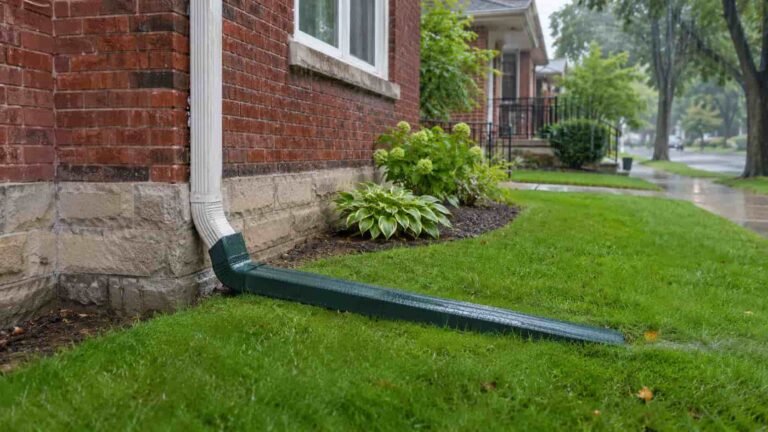
Downspout disconnection means separating the vertical pipe that carries roof water from the City’s sewer connection, so rainwater is released onto your property instead. The City requires all property owners in Toronto to ensure their downspouts are disconnected from the sewer system (City of Toronto, 2025).
The aim is to reduce the load on sewers during heavy rain. When too much stormwater enters the sewer system at once, it increases the risk of overloads and basement flooding in the wider neighbourhood.
| Connected downspout | Disconnected downspout |
|---|---|
| Roof water flows into the City sewer | Roof water is released onto your property |
| Adds to sewer load in heavy rain | Reduces pressure on the sewer system |
| Not allowed under the City’s requirement | Meets the City’s requirement, if done correctly |
Who Does the Rule Apply To?
The City page says the requirement applies to all property owners in Toronto (City of Toronto, 2025). It does not separate residential from other property types. If you own a property in the city and your downspout still connects to the sewer, check your obligations on the City’s page or by calling 311.
The page was created on 17 November 2017 and last modified on 22 July 2025, and it does not state a separate effective date for the requirement (City of Toronto, 2025). Check the City page for the latest wording before you act.
What Does the City Require You to Do?
The disconnection must be done safely and in line with the Property Standards Bylaw, specifically the section on roofs and roof structures, and the open sewer standpipe should be capped after the downspout is disconnected (City of Toronto, 2025). The City also gives one measurement for the cut.
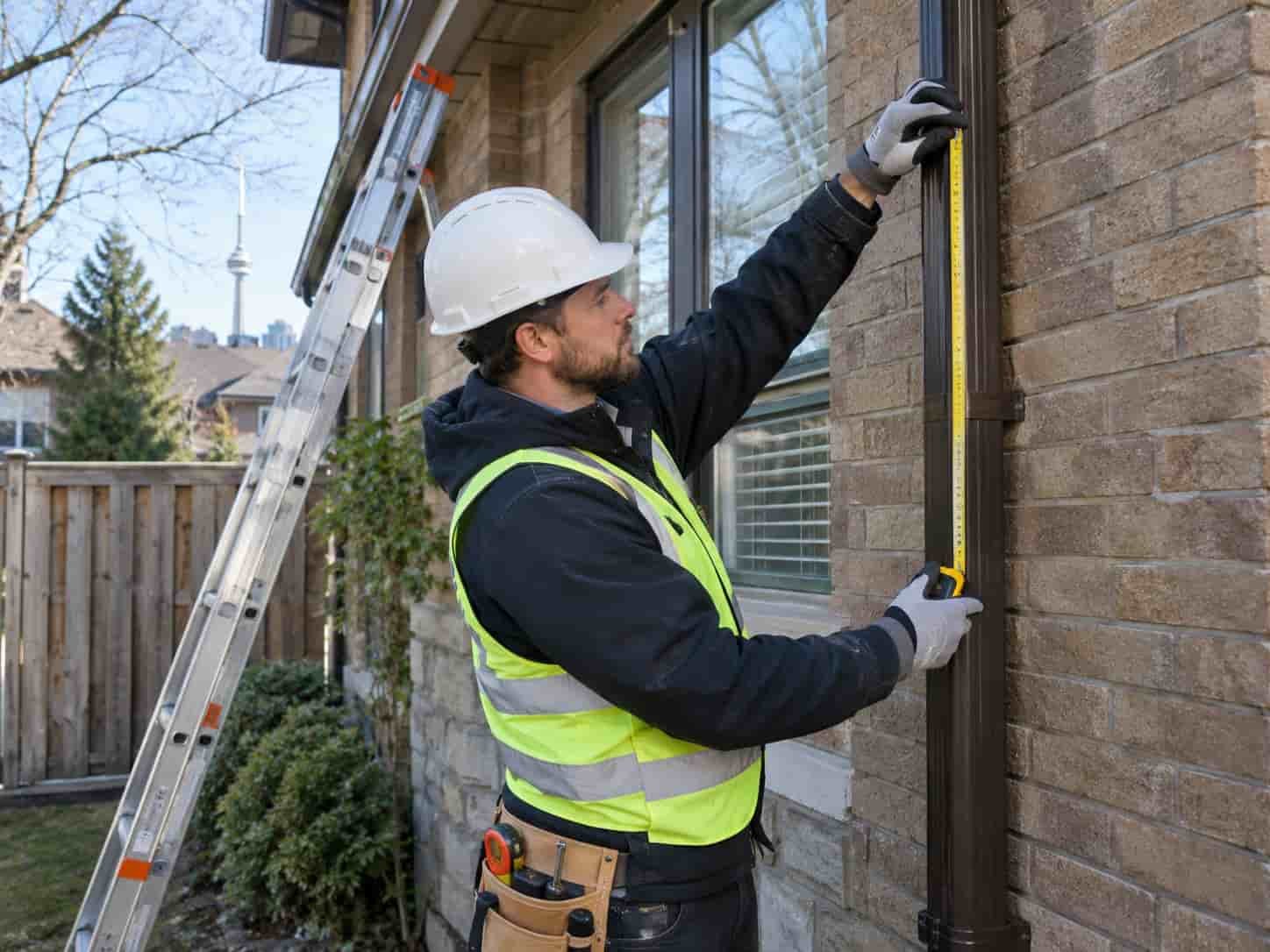
The page says to measure 23 cm (9 in.) from where the downspout enters the sewer connection, which is where the downspout is cut (City of Toronto, 2025). Read the City’s instructions in full before any work starts, since they are the official reference.
| Requirement from the City page | What it means |
|---|---|
| Disconnect downspouts from the sewer | Roof water must not enter the sewer connection |
| Work done safely and per bylaw | Follow the Property Standards Bylaw for roofs and roof structures |
| Measure 23 cm (9 in.) from the sewer connection | This is where the downspout is cut |
| Cap the open sewer standpipe | Prevents the opening from being left unsealed |
Where Should the Water Go?
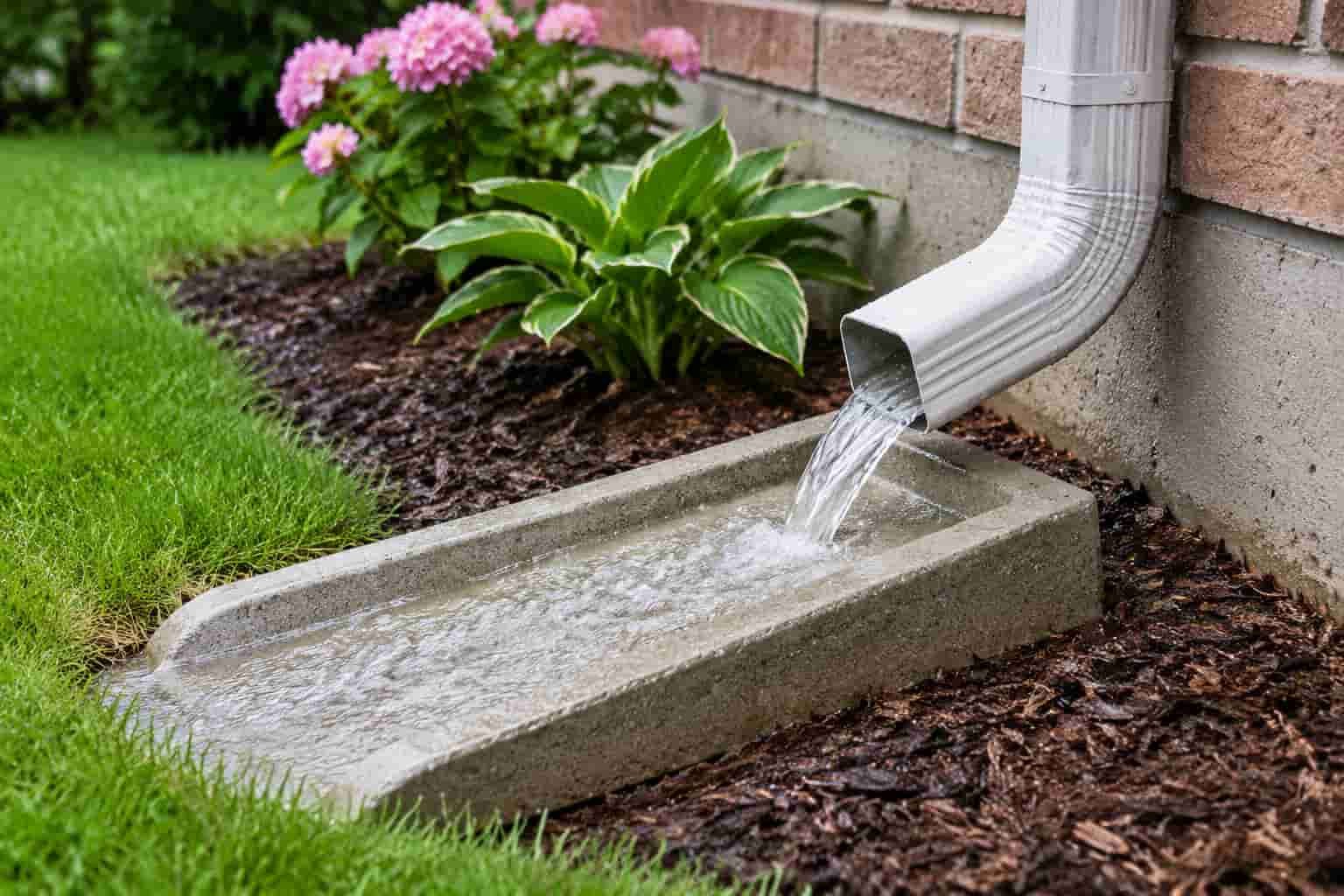
The City says water should flow away from the foundation walls, should not harm a neighbour’s property and should not flow directly onto a City sidewalk (City of Toronto, 2025). The page does not give a set distance for how far water should be directed from the foundation, so we do not quote one.
- Away from your own foundation walls
- Not onto a neighbour’s property in a way that causes harm
- Not directly onto a City sidewalk
- Over ground that slopes away from the house, where possible
Many homeowners use a downspout extension or a splash pad to guide the water. Choose a solution that suits your yard and slope, and ask a qualified professional if you are unsure.
Why Does Drainage Away From the Foundation Matter?
Water that collects beside the foundation can seep into the basement, soften the soil and cause damp problems over time. Moving roof water away from the walls protects the house and reduces the chance of basement leaks. This is true for any home, whatever the City rule says.
Check the ground near each downspout after heavy rain. If water pools near the walls, the slope may need correcting, or the downspout needs a longer extension or a different location.
| Sign | What it may mean |
|---|---|
| Pooling water beside the foundation | Ground slopes toward the house, or the downspout discharges too close |
| Damp or stained basement walls | Water is reaching the foundation |
| Eroded soil under the downspout | Water is hitting the ground with no splash pad or extension |
| Water running onto a neighbour’s yard or the sidewalk | The discharge point needs changing |
Can You Disconnect the Downspout Yourself?
The City page describes the work and the measurement, so some owners do it themselves. The work must still be done safely and meet the bylaw, and it involves working at height and cutting metal. If you are not comfortable with ladders, tools or the bylaw requirements, hire a qualified professional.
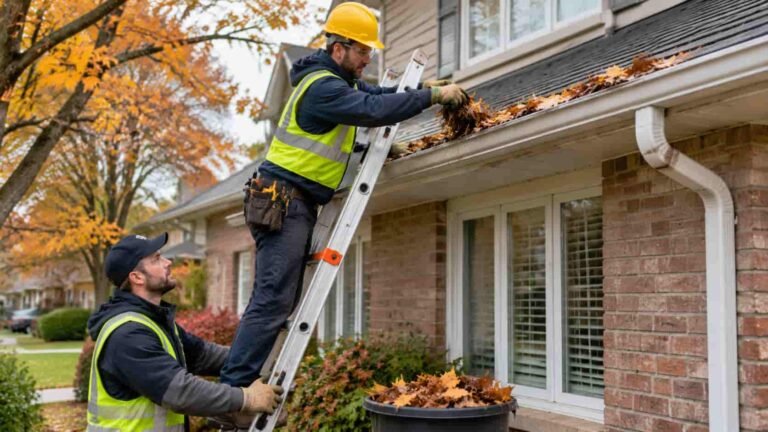
Ladder falls are a real risk. Use a stable ladder on firm ground, never work alone on a tall wall and leave work on the upper storeys of a house to a professional with the right equipment.
What If Disconnection Is Not Possible?
You can apply for an exemption when disconnection is hazardous or not technically feasible (City of Toronto, 2025). Before applying, the City expects owners to try relocating downspouts, re-grading eavestroughs or correcting the slope of the property.
- Complete the Mandatory Downspout Disconnection Exemption Application
- Attach a sketch of the property
- The City considers relocation options, hazard mitigation or grading correction, and compliance with other bylaws
- Applicants are notified in writing of each decision
- The General Manager may revoke an exemption if the information was misleading or inaccurate, or if conditions change
Source for these points: City of Toronto (2025). Use the City’s official form and instructions.
Is There Financial Help?
Yes, for eligible low-income seniors and persons with disabilities. The City reimburses up to $500 for labour and materials (City of Toronto, 2025). The page sets out the eligibility rules and how to apply, so check it before you begin work.
| Requirement | Detail from the City page |
|---|---|
| Property | Own a residential property in Toronto |
| Household income | Combined household income of $50,000 or less |
| Who qualifies | Seniors or persons with disabilities who meet the criteria on the page |
| Maximum reimbursement | Up to $500 for labour and materials |
| Application deadline | Within one year of completing the work |
| Documents | Itemized invoices or receipts, before-and-after photos, recent Notices of Assessment |
Keep all receipts and take photos before and after the work. The page also asks applicants to black out Social Insurance Numbers on documents (City of Toronto, 2025).
How Do Downspouts and Eavestroughs Work Together?
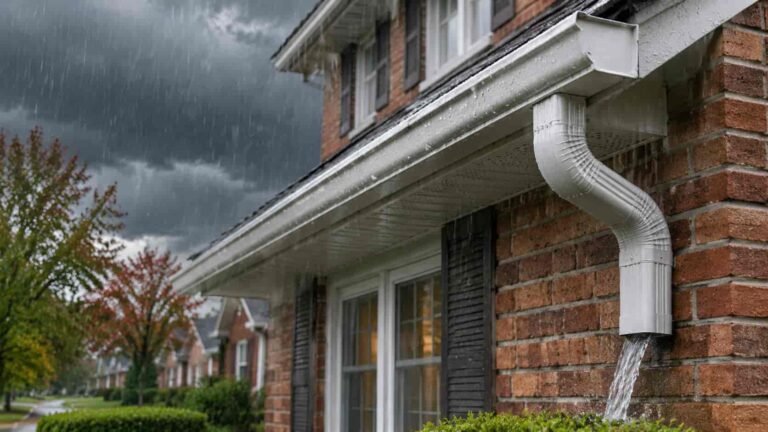
The eavestrough collects roof water, and the downspout carries it down and away. If either part is blocked, damaged or poorly placed, water can overflow, run down walls or pool beside the foundation. Disconnecting a downspout from the sewer makes where the water lands even more important.
Keeping the system clear helps it work. Our guide to how to prepare gutters for storm season covers what to check before heavy weather.
What Problems Can Appear After Disconnection?
Common problems include water pooling near the house, erosion beneath the outlet, icy patches in winter and overflow when the downspout is blocked. Most come from short or badly placed discharge points, so check the system after the first heavy rain.
- Pooling near the foundation: lengthen the extension or change the slope
- Soil erosion: add a splash pad or hard surface under the outlet
- Winter ice: avoid discharging across walkways where water can freeze
- Blocked downspout: clear debris and check the elbow joints
If you notice sagging, leaking joints or pulled-away fixings, read our guide on signs you need gutter repair.
How Do You Check Whether Your Downspouts Are Connected?
Walk around the house and follow each downspout to the ground. A downspout that runs straight into a pipe set in the ground or into the foundation area may still be tied into the sewer. If you cannot tell, ask a qualified professional to inspect it, or contact the City on 311.
- Note every downspout on the house, including those at the back and side
- Look for a pipe that disappears into the ground without an open outlet
- Check whether water drains onto the lawn or into a buried pipe
- Take photos, so you can show a professional or the City
What Should You Do Before You Start the Work?
Read the City page, plan where the water will go and gather what you need. Check that the downspout and eavestrough are in good condition, since a rusted or loose section can fail after the sewer connection is removed. Fix those problems first.
- Read the City’s instructions and the relevant bylaw section
- Decide where each downspout will discharge
- Check the downspout, brackets and joints for rust, dents or looseness
- Choose extensions or splash pads that match the slope of your yard
- Keep receipts and take before photos, in case you apply for assistance
What Happens if You Ignore the Requirement?
The City page we reviewed does not describe penalties, so we do not quote any. The practical risk is wider than enforcement, because a connected downspout adds to sewer load in heavy rain, which the City links to overloads and basement flooding risk (City of Toronto, 2025).
If you are unsure about your obligations, contact the City on 311 and ask. It is better to confirm the rule before work than to guess after.
What About Winter and Ice?
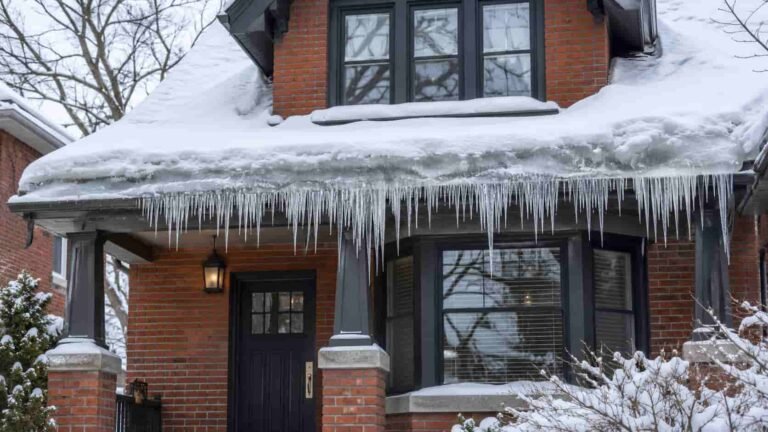
In winter, water released near paths or driveways can freeze and create slip hazards. Think about where meltwater will run when the ground is frozen, and keep discharge points away from walkways, steps and shared areas. Check the system during mild spells for ice that blocks the outlet.
A downspout that is frozen solid can force water to overflow the eavestrough. Clear snow and ice from around the outlet safely and from the ground only.
How Do You Choose Where to Release the Water?
Pick a spot on your own property that slopes away from the house, is not close to a neighbour’s wall or a City sidewalk and has soil or a hard surface that can take the flow. Walk the property during rain to see where water naturally goes.
| Option | Works best when | Watch out for |
|---|---|---|
| Downspout extension | The yard slopes away from the house | Trip hazards and lawn mowing |
| Splash pad | The outlet sits close to bare soil | Needs a stable base |
| Relocated downspout | The current position is too close to a neighbour or a sidewalk | May need professional work |
| Regraded soil | Ground slopes toward the house | Larger job, may need a landscaping contractor |
The City’s own page lists relocating downspouts, re-grading eavestroughs and correcting the slope as steps to try before applying for an exemption (City of Toronto, 2025).
What Can a Professional Help With?
A qualified professional can check how your eavestroughs and downspouts are set up, suggest where water should go and carry out the work safely. Different jobs suit different trades, including eavestrough work, landscaping and grading, so describe the problem clearly when you call.
Silkwaters Windows and Eaves Cleaning focuses on exterior property care in Toronto and the GTA. You can find out more on the Silkwaters website. For downspout disconnection work, grading or exemptions, confirm with the company what it handles, and check the City’s page for official requirements.
A Short Checklist for Toronto Homeowners
Use a simple checklist to work through the topic. Start with what you have, check what the City requires and then decide whether to do the work or hire help.
| Step | Action |
|---|---|
| 1 | Check whether any downspout still connects to the sewer |
| 2 | Read the City of Toronto page and the bylaw requirements |
| 3 | Decide where water can safely go on your property |
| 4 | If disconnection is not possible, look at the exemption process |
| 5 | If you may be eligible, check the $500 assistance rules before starting |
| 6 | Do the work safely, or hire a qualified professional |
| 7 | Check the system after heavy rain and again in winter |
Frequently Asked Questions
Is downspout disconnection mandatory in Toronto? The City says all property owners in Toronto must ensure their downspouts are disconnected from the sewer system (City of Toronto, 2025).
How far should water go from my foundation? The City page does not give a set distance. It says water should flow away from the foundation walls (City of Toronto, 2025).
Where is the downspout cut? The City page says to measure 23 cm (9 in.) from where the downspout enters the sewer connection (City of Toronto, 2025).
What if I cannot disconnect my downspout? You can apply for an exemption if disconnection is hazardous or not technically feasible (City of Toronto, 2025).
Is there financial help? Eligible low-income seniors and persons with disabilities can be reimbursed up to $500 for labour and materials (City of Toronto, 2025).
Can water flow onto a sidewalk or a neighbour’s yard? No. The City says water should not harm a neighbour’s property or flow directly onto a City sidewalk (City of Toronto, 2025).
Should I hire a professional? If you are not comfortable with ladders, cutting metal or the bylaw, yes. A qualified professional can do the work safely.